Glanz
Glanz (Diskussion | Beiträge) Keine Bearbeitungszusammenfassung |
Glanz (Diskussion | Beiträge) Keine Bearbeitungszusammenfassung |
||
| Zeile 1: | Zeile 1: | ||
<iframe> https://moocit.de/frames/Lesen_lernen.html </iframe> | |||
<iframe> https://moocit.de/frames/game.html </iframe> | <iframe> https://moocit.de/frames/game.html </iframe> | ||
Version vom 13. Mai 2024, 21:46 Uhr


Glanz
- Akad. Grad: Dr. phil.
- email: info(at)glanz-verlag.de
- Beruf: Autor, Künstler, Pädagoge, Verleger
- Stammschule: Emil-Thoma-Realschule, Schützenallee 33, 79102 Freiburg

Bildung
- Seit 09/24 - Lehrer an der Weihungstalschule, Staig-Altheim (D, BK, T)
- Seit 11/06 - Gewerbe: Selbstverlag mit Bildungsprodukten
- 09/22 - 07/24 - Lehrer an der GMS Ihringen
- 09/16 - 08/22 - Lehrer an der Emil-Thoma-Realschule, Freiburg (D, BK, T)
- 04/12 - 07/16 - Doktor der Philosophie an der Pädagogischen Hochschule in Freiburg: Dissertation „Diskurskultur in der Filmbildung. Kommunikationswissenschaftliche Grundlagen, Analyse von Onlineforen und Folgerungen hinsichtlich der Konzeption eines Bildungsportals für Kurzfilme.“ (siehe Digitale Diskurskultur in der Bildung)
- 10/12 - 09/13 - Stipendiat der Karl-Steinbuch Stiftung (MFG)
- 09/06 - 08/12 - Lehrer an der Theodor-Heuss-Realschule Lörrach (BK)
- 10/05 - 09/11 - Promotionsaufbau, Pädagogische Hochschule Freiburg (BK / EZ / D) / Abschlussarbeit: ART IQ
- 09/02 - 07/18 - Lehrer an der Gewerbeschule Lörrach (D, BK, Ct, Proj, E, Gk, Wi, Fz)
- 02/01 - 07/02 - Referendariat: Wilhelm Hauff RS Pfullingen / Seminar Reutlingen / Abschluss: Zweites Staatsexamen
- 10/94 - 03/01 - Lehramtsstudium, Pädagogische Hochschule Freiburg (D / BK / NuT) / ZULA: Modelle rhetorischer Kommunikation / Abschluss: Erstes Staatsexamen
- 08/92 - 06/94 - Technische Oberschule: Ferdinand-von-Steinbeis-Schule Ulm / Abschluss: Fachgebundene Hochschulreife
- 08/89 - 07/92 - Industriemechaniker: IVECO Magirus, Abschluss: Industriemechaniker
- 08/82 - 07/89 - Realschule Ulm-Wiblingen
- 08/78 - 07/82 - Grundschule Staig, Alb-Donau-Kreis

Fortbildungen
- 05/20 - Mit Schüler*innen MOOCs aus OERs zusammensetzen - Kompetenzzentrum für Lehrerfortbildung Osnabrück (KOS) - Webinar
- 03/20 - Lehrerfortbildung: MOOC-Medienmentoren ausbilden, MOOCs in formativer Evaluation entwickeln | Pädagogischen Hochschule Freiburg
- 02/20 - Lehrerfortbildung: MOOC-Medienmentoren ausbilden, interaktive Aufgaben erstellen | Pädagogischen Hochschule Freiburg
- 01/20 - Lehrerfortbildung: MOOC-Medienmentoren ausbilden, animierte Videos erstellen | Pädagogischen Hochschule Freiburg
- 12/19 - Form Follows Function: P4P MOOCs auf MOOCit oder Ilias | Pädagogischen Hochschule Freiburg
- 11/19 - Lehrerfortbildung: MOOC-Medienmentoren ausbilden, MOOCs aus OERs zusammensetzen | Pädagogischen Hochschule Freiburg
- 03/19 - Qualitätszirkel Digitalisierung: Moderation & Workshop | MOOCs & Binnendifferenzierung | Pädagogischen Hochschule Freiburg
Konstante Projekte
- Seit 2022 - aiMOOC.org: Interaktive KI-Online-Lernkurse
- Seit 2022 - Wer ist Kunst?, EVERYONEwillbeART.com .org, EVERYONEisART.org, MementoMultiple.com
- Seit 2021 - Jeder Mensch ist Kunst
- Seit 2021 - Märchen lernen
- Seit 2021 - BackOnWood.com
- Seit 2020 - Jack Joblin Design
- Seit 2019 - Bierdeckelquiz.de
- Seit 2018 - Liedlernen.de
- Seit 2017 - Kult-Spiel.de
- Seit 2016 - Freiburgspiel.de
- Seit 2015 - MOOCit.de
- Seit 2014 - Joblin.de
- Seit 2013 - Kurzfilmkanon.de
Publikationen
Seit 2008 im Selbstverlag und anderen Verlagen: Idee | Konzept | Autorenschaft | Distribution
KI im Unterricht
|
|





MOOCs in der Bildung
- 07/20 - MOOCs in der Bildung, 7 Fortbildungen, ISBN 979-8-668377-51-0
- 09/19 - MOOCs selbst erstellen * P4P MOOCs in Schule, Ausbildung, Studium - Kopiervorlagen, ISBN 978-3-940320-28-5
- 01/19 - 1001 German Angst / Grundrechte-Countdown, ISBN 978-3-940320-14-8
- 12/18 - Kein Verständnis ist wahrscheinlicher, ISBN 978-3-940320-15-5
- 07/17 - Medienkonzept für deutsche Schulen
- 01/17 - MOOC it! MOOCs für die Schule und das Studium, ISBN 978-3-940320-13-1 (E-Book)
- 09/16 - Digitale Diskurskultur in der Bildung (Dissertation), ISBN 9783940320-063
- 07/15 - MOOCit.de: Bildungsportal für P4P Mini-MOOCs
Öffentlichkeitsarbeit an Schulen
|
|

Kunst + Design
- 10/21 - Jeder Mensch ist Kunst. Fleisch ist Kunst. ISBN 978-3-940320-31-5
- 05/21 - Tonertransferdruck im Kunstunterricht
- 04/21 - BACK ON WOOD (Tonertransferdruck Serie)
- 01/21 - Salmon Dress Jack Joblin
- 10/20 - Jack Joblin Christmas Present Design, ISBN 979-8-550104-06-4
- 04/20 - Jack Joblin SpreadShirt, Bsp. Linker Handsegen
- 08/18 - Joblin Factory, ISBN 978-3-940320-19-3
- 07/18 - Jack Joblin, ISBN 978-3-940320-11-7
- 12/14 - Can’t See Dylan (E-Book)
- 09/14 - Ars Moriendi Bob Dylans Kunst des Sterbens / Bob Dylan’s Art of Dying (E-Book)
- 08/14 - Kunstquiz / Art-Quiz (E-Book)
- 07/13 - Kurzfilmkanon.de: 100 Kurzfilme für die Bildung
- 09/11 - ART IQ, ISBN 9783940320094
- 01/10 - Joblin Family | Fiktive Kunstfiguren, z.B. Bob Joblin DNB
- 10/08 - Fair-Image.de: Transferdruck für Hilfsprojekte
- Seit 99 - Fish-Meat: Lachskunst
Kunst + Bildung
- 05/22 - Wer ist Kunst? ISBN 979-8820255588
- 10/21 - Jeder Mensch ist Kunst. Ich bin Kunst. ISBN 978-3-940320-80-3
- 09/21 - Jeder Mensch ist Kunst. Du bist Kunst. ISBN 978-3-940320-30-8
- Seit 2021 - Kunsttechniken, z.B. Druck: Tonertransferdruck, Holzschnitt, Siebdruck
- Seit 2020 - Kunst nach Bildungsplan
- Seit 2016 - Kunstgeschichte
Kunst + Literatur
- Seit 2009 - Addbooks (Konzeptkunst)
- 07/22 - Wie der tote Hase den Menschen zur Kunst erklärt
- 06/22 - Würde Jesus aus der Kirche austreten?
- 06/21 - Märchen lernen
- 07/20 - Der faule Paule, Kinderbuch, ISBN 979-8-666731-44-4
- 11/18 - Die wichtigsten Texte der Menschheitsgeschichte, ISBN 978-3-940320-25-4
- 10/14 - Deutschland gegen Krieg? (E-Book)
- 12/14 - Der Koran als Frage (E-Book)
- 12/14 - Die Bibel als Frage (E-Book)
- 06/14 - Verweile doch. Literaturspiel 1/2 (E-Book)
- 06/14 - Texte der Orientierung (E-Book)
- 07/14 - Sein oder Nichtsein. Weltliteraturquiz (E-Book)
- 05/14 - Taschen-Bücher: Transferdruck mit literarischen Texten
- 09/09 - Addbook: G – Texte der Orientierung, ISBN 9783940320070
- 09/08 - Kult-Spiel deutschsprachige Literatur, ISBN 9783940320001
Kunst + Musik
- 01/22 - Liedtexte suchen Komponisten
- 02/21 - Song Shirt & I Love Music (Spreadshirt)
- 02/20 - Adventskalenderbuch 24 Weihnachtslieder, 24 Weihnachtsbilder & die Weihnachtsgeschichte, ISBN 979-8-613435-12-8
- 01/20 - Mein Mitmach Liederbuch, ISBN 978-3-940320-29-2
- 01/18 - Liedlernen.de
- 09/16 - Jedes Jahr Bob Dylan
Kunst + Spiele
- 10/18 - Freiburger Stadtführung, ISBN 978-3-940320-20-9
- 10/18 - Kult-Spiel, ISBN 978-3-940320-02-5
- 09/18 - Freiburgspiel, ISBN 978-3-940320-01-8
- 10/13 - Freiburger Kneipen-Tour, ISBN 9783940320-032
Schulprojekte / Soziale Plastik / Diskursive Kunst
- 2021 - Biotop und Planung der Sozialen Plastik "Baum des Jahres", Gewerbeschule Lörrach (GWS)
- 2021 - Tablet-Führerschein
- 2020 - Biotop, GWS
- 2019 - Liedlernen.de, Christophorus Kindergarten Freiburg
- 2018 - Freiburgspiel, Emil-Thoma-Realschule
- 2018 - MOOC the nature, Realschule Endingen
- 2017 - Rette unsere Zukunft, Realschule Endingen
- 2017 - Deutschland gegen Krieg (von A bis Z), GWS
- 2017 - Ausschnitte & Back on Wood, GWS
- 2017 - Kult-Spiel.de, GWS
- 2016 - Jedes Jahr Dylan & Brecht, Emil-Thoma-Realschule Freiburg
- 2016 - MOOCit Wettbewerb, GWS
- 2015 - Fair macht Schule, GWS
- 2015 - Taschen-Bücher: Maul- & Laber-Taschen, GWS
- 2015 - Der Grundrechte-Countdown im digitalen Zeitalter, GWS
- 2014 - Kurzfilmkanon Wettbewerb, GWS
- 2013 - Ich komm' nicht in die Tüte (Dein Readymade), GWS
- 2012 - That's Art Wettbewerb, GWS
- 2011 - Kritzel-Kollektion & SC Freiburg Kritzel-Edition, GWS
- 2010 - WM-Wettbewerb, GWS
- Seit 2009 Hilfsprojekt Mandi, GWS
- Seit 2008 Schülerfirma Fair-Image.de, Gewerbeschule Lörrach (GWS)
Fußball
- 01/15 - 0:1 Fußballquiz (E-Book)
- 06/14 - 2:0, 3:0 Fußballquiz
- 05/14 - 1:0 Fußballquiz + WM 2014 Zusatzfragen (E-Book)
- 01/12 - 3:0 Fußballquiz, ISBN 9783940320-100
- 01/10 - 2:0 Fußballquiz, ISBN 9783940320-056
- 10/09 - 1:0 Fußballquiz, ISBN 9783940320-049
Verschiedenes
- 01/18 - 100 Matching Punkte, ISBN 978-3-940320-16-2
- 07/00 - 07/02 - Cornelsen: Autorentätigkeit, Deutschbuch 2 (6. Schuljahr / RS), ISBN 9783464603420, Kapitel: Fliegendes Klassenzimmer, Vom Buch zum Film (inkl. Lehrerbandkapitel)
- Seit 2007 - Werbedesign: Postkarten, Aufkleber, Flyer, Faltanleitungen, Poster, Bierdeckel usw.
Ausstellungen
- Seit 2021 Topp Shop Ausstellungen
- Seit 2021 Jeder Mensch ist Kunst
- Seit 2020 Gift Shop Vernissage - Jack Joblin
- 05/21 - documenta Guerilla Vernissage (Dokumentation)
- 07/12 - Fish You Were Here | Guerilla Vernissage (Aktionskunst) | Documenta 2012
- 10/07 - Salmon Art | Lachskunst Ausstellung | Vorderhaus, Freiburg
- 10/06 - Salmon Art | Lachskunst Ausstellung (Fleischstrukturen) | Café Ruefetto, Freiburg
- 07/00 - Last Supper | Lachskunst Ausstellung (Objektkunst) | Pädagogische Hochschule Freiburg
A-Z Soft skills
- Bild, Design: Photoshop, Affinity (Photo / Designer), CorelDraw, Illustrator, InDesign
- Cloud: Dropbox, Evernote, iCloud
- E-Learning: LearningApps, H5P, ILIAS, Iversity, Khan Academy, P2PU, Coursera
- Internetseiten erstellen
- MediaWiki: www.moocit.de (offen), Schoolix Wiki: wiki.fair-image.de (geschlossen)
- Shop Gambio / xt:Commerce 4 CE: www.glanz-verlag.de, www.fair-image.de
- GoLive (HTML): www.fish-meat.de
- CMS KIT: www.Kurzfilmkanon.de
- Weitere Eigenproduktionen: Moodle, TYPO3, Drupal, Joomla, iWeb, WordPress, Google Sites, LivePages
- MOOC: MOOC-Eigenproduktionen mit SuS: Kombinationen aus Video, interaktiven Aufgaben, Präsentation, Bild und Design
- Musik: Garage Band, Logic
- Präsentation - Keynote, MS PowerPoint, OO Impress, Prezi, Powtoon
- Publishing: VlB, Libri, KNV, KDP, VG-Wort, Sigil, Libreka
- Shop: Amazon, Dawanda, Gambio
- Text: Page, MS Word, Citavi
- Video: H5P, Final Cut, iMovie, Premiere, Movie Maker
- Zahlen: Numbers, MS Excel
Links
Wikipedia Udo Glanz
Wikipedia Glanz-Verlag
Glanz
Udo Glanz (born 10 July 1972 in Ulm, Germany) is a German educator, author, artist, and publisher based in Freiburg im Breisgau. He is widely recognised as a pioneer in integrating MOOCs into German schools, vocational training, and higher education, and as an advocate of accessible, interactive, and creative digital learning formats. Through his educational platforms MOOCit.de and aiMOOC.org, Glanz has enabled thousands of learners and educators to design their own courses using multimedia, open educational resources (OER), and collaborative peer-to-peer learning approaches.
Glanz is the founder and managing director of Glanz-Verlag, an independent publishing house specialising in educational games, interactive learning materials, and art-related publications. His work bridges the fields of pedagogy, media literacy, digital innovation, and conceptual art.
Early life and education
Glanz attended primary school in Staig (Alb-Donau district) and the Realschule in Ulm-Wiblingen. From 1989 to 1992, he completed an apprenticeship as an industrial mechanic at IVECO Magirus. He then earned his subject-specific higher education entrance qualification at the Ferdinand-von-Steinbeis Technical Secondary School in Ulm (1992–1994).
Between 1994 and 2001, Glanz studied to become a teacher at the University of Education Freiburg, with a focus on German, fine arts, and science/technology. His thesis examined models of rhetorical communication. Following his preparatory service in Pfullingen and Reutlingen, he passed the Second State Examination in 2002.
In 2012, Glanz began his doctoral studies at the University of Education Freiburg, supported by a Karl-Steinbuch Foundation scholarship. His dissertation, Digitale Diskurskultur in der Bildung ("Digital Discourse Culture in Education"), completed in 2016, analysed educational discourse quality on platforms such as Wikipedia, YouTube, and Facebook, and developed criteria for designing an educational portal for short films.
Career
Glanz began teaching in 2001 at vocational and secondary schools in Lörrach, introducing students to innovative, media-rich learning methods. His growing interest in digital education led him to develop the concept of P4P MOOCs (peer-for-peer MOOCs), where learners create learning modules for each other.
In 2006, he founded Glanz-Verlag, initially publishing educational board and card games. Over time, the company expanded into books, e-learning materials, and blended learning concepts for schools and cultural institutions.
Since 2013, Glanz has implemented numerous online educational projects, often combining game-based learning, cultural education, and community participation, including:
- Kurzfilmkanon.de – a curated canon of short films for education
- Kult-Spiel.de – a literature and culture game
- Freiburgspiel.de – a city-based educational game
- Joblin.de – a fictional character-based learning portal
- Bierdeckelquiz.de – a trivia format on beer mats
- Liedlernen.de – music learning platform
From 2016 to 2022, Glanz taught at Emil-Thoma-Realschule in Freiburg, where he developed a comprehensive media concept for schools. From 2022 to 2024, he taught at GMS Ihringen. Since 2024, he has been teaching at the Weihungstalschule in Staig-Altheim.
Educational innovation
Through MOOCit.de (founded 2015), Glanz introduced an open platform where teachers, students, and institutions can collaboratively create MOOCs tailored to their curricula. The platform supports interactive tasks, videos, and project-based learning, and has been used in various EU projects such as Biofector.
In 2022, Glanz launched aiMOOC.org, which integrates artificial intelligence into MOOC creation, enabling personalised learning paths, automated feedback, and real-time adaptation to learner progress.
He has conducted teacher training courses across Germany, including MOOC Media Mentor programmes at the University of Education Freiburg and the University of Osnabrück, focusing on digital differentiation, tablet skills, and the integration of OER.
Artistic work
Parallel to his educational career, Glanz works as a conceptual artist under the pseudonym Jack Joblin. His art projects, such as Salmon Art, Back on Wood, and Everyone is Art, explore the boundaries between education, social engagement, and art. He has exhibited in both formal and informal contexts, including guerilla exhibitions at the documenta in Kassel.
Projects like Jeder Mensch ist Kunst ("Every Person is Art") and Wer ist Kunst? ("Who is Art?") reflect his commitment to Beuysian ideas of the social sculpture and the democratisation of art.
Selected publications
MOOCs and digital education
- MOOCs selbst erstellen – P4P MOOCs in Schule, Ausbildung, Studium (2019), ISBN 978-3-940320-28-5
- MOOC it! MOOCs für die Schule und das Studium (2017), ISBN 978-3-940320-13-1
- Digitale Diskurskultur in der Bildung (Dissertation, 2016), ISBN 978-3-940320-06-3
- 1001 German Angst vor der digitalen (R)Evolution (2019), ISBN 978-3-940320-14-8
- Kein Verständnis ist wahrscheinlicher – Das IBW-Modell für digitale Diskursqualität (2018), ISBN 978-3-940320-15-5
- Medienkonzept für deutsche Schulen (2017) – online
Educational games and literature
- Freiburgspiel (2018), ISBN 978-3-940320-01-8
- Kult-Spiel (2018), ISBN 978-3-940320-02-5
- Die wichtigsten Texte der Menschheitsgeschichte (2018), ISBN 978-3-940320-25-4
Art and conceptual works
- Jeder Mensch ist Kunst (2021), ISBN 978-3-940320-31-5
- Back on Wood (2021) – toner transfer series
- Joblin Factory (2018), ISBN 978-3-940320-19-3
Awards and recognition
- Karl-Steinbuch Foundation scholarship (2012–2013) for innovative educational research
- Featured projects in EU-funded educational initiatives (e.g., Biofector)
External links
- Glanz-Verlag official website
- MOOCit.de – MOOCs for Schools and Training
- aiMOOC.org – AI-driven MOOCs
- Udo Glanz on LovelyBooks
Glanz
MOOCit.de is a German-language online platform and wiki for creating, sharing, and certifying peer-generated MOOCs (Massive Open Online Courses), primarily aimed at schools, vocational training, and adult education. Launched in the mid-2010s, it is maintained by Glanz-Verlag under the direction of Dr Udo Glanz. The platform emphasises learner engagement, open educational resources (OER), and interactive media such as videos, quizzes, and tasks.
Overview
MOOCit.de enables users to design and publish Mini-MOOCs – or P4P (peer-for-peer) MOOCs – based on freely available materials (OERs). Users can embed videos, images, and interactive exercises (for example, drag-and-drop, cloze tests) into a course template without programming skills. This fosters active participation and collaborative knowledge creation among students and educators.[1]
Features
Course creation
The platform provides ready-made templates that can be automatically loaded and customised with text, multimedia, and external interactive tools. Completed Mini-MOOCs can be shared publicly, assigned to classes, or published as exemplary courses.[2]
Certification
MOOCit.de offers a multi-tier certification system to recognise user achievements:
- School certificate
- Validated by a teacher for courses created and completed within an educational institution.
- MOOCit certificate
- Endorsed jointly by a teacher and MOOCit experts, available for a fee, including basic review.
- Premium certificate
- Includes expert review, plagiarism checks, publication in the "Best MOOCs" section, and platform protection.[3]
Educational integration
The platform is used in blended learning and flipped classroom models. As a wiki, it supports collaborative course creation and encourages students to act as knowledge producers rather than passive recipients.[4]
Training and support
Glanz-Verlag offers professional development courses such as the "MOOC Media Mentor" programme, guiding educators and institutions in designing MOOCs with interactive tasks, AI integration, animated videos, and media literacy components.[5]
AI-enhanced learning (aiMOOCs)
The platform supports AI-powered MOOCs (aiMOOCs), generated from structured prompts using AI tools. aiMOOCs integrate AI-generated text, images, and interactive activities, reviewed by experts before publication. The approach allows for personalised learning and self-differentiation in classroom or remote settings.[6]
Editorial backing
MOOCit.de is operated by Glanz-Verlag, an independent educational publisher founded in 2006 by Dr Udo Glanz in Freiburg im Breisgau. Since 2013, the publisher has provided editorial oversight, certification services, and teacher training to support the platform’s adoption in schools and training institutions.[7]
Educational impact
The platform promotes active, creative participation in education by encouraging learners to produce instructional content for their peers. P4P MOOCs develop media literacy, critical thinking, and presentation skills. aiMOOCs extend these principles through adaptive, AI-supported personalisation. Certification systems add recognition value for learners in academic and vocational contexts.[8]
External links
Schulfach+

|
|
















aiMOOCs



aiMOOC Projekte

















|
|
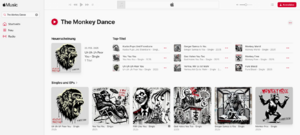
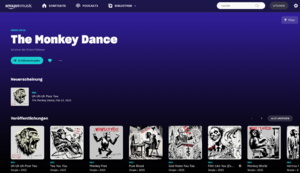
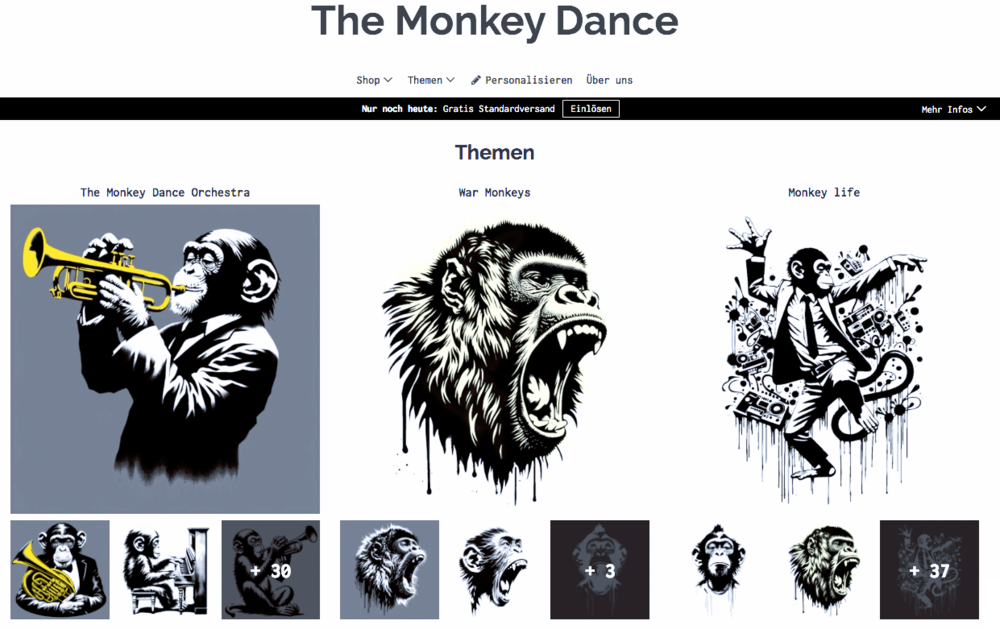
THE MONKEY DANCE
|
|
|


|
 |


Sponsoren, Förderer, Kooperationspartner

Children for a better world >> Förderung der AI Fair-Image Challenge
Fair-Image wird von CHILDREN JUGEND HILFT! gefördert und ist mit der deutschlandweiten AI Fair-Image Challenge SIEGERPROJEKT 2025. Alle Infos zur Challenge hier >>. Infos zum Camp25 gibt es hier. Wenn auch Ihr Euch ehrenamtlich engagiert und noch finanzielle Unterstützung für Eurer Projekt braucht, dann stellt gerne einen Antrag bei JUGEND HILFT.