WWII
Introduction
Welcome to this aiMOOC on World War II – the largest and deadliest armed conflict in human history (1939–1945). In this course, you will learn about the causes, events, consequences, and lasting impacts of WWII. We will look at the war from a global perspective: how it started, how it was fought across Europe, Africa, Asia, and the Pacific, and how it reshaped the world order.
You will also reflect on questions like: Why did WWII break out only 20 years after WWI? What role did dictators such as Adolf Hitler, Benito Mussolini, and Hideki Tojo play? How did alliances like the Allied Powers and Axis Powers determine the course of the war? And what lessons can we learn today about peace, democracy, and international cooperation?
Causes of World War II
After World War I, the Treaty of Versailles left Germany humiliated, facing economic hardship, and political instability. This climate enabled the rise of Fascism and National Socialism. Aggressive expansion policies by Nazi Germany, Imperial Japan, and Fascist Italy destabilized international relations.
Key causes included:
- Harsh conditions of the Treaty of Versailles
- Economic crises during the Great Depression
- Rise of totalitarian regimes in Germany, Italy, and Japan
- Policy of Appeasement by Britain and France
- Failure of the League of Nations
Major Theaters and Battles
WWII was fought across the globe:
Europe
- German Invasion of Poland (1939) – start of the war
- Battle of Britain (1940) – first major air campaign
- Operation Barbarossa (1941) – German invasion of the Soviet Union
- Battle of Stalingrad (1942–43) – turning point in Eastern Europe
- D-Day / Normandy landings (1944) – opening of Western Front
Asia-Pacific
- Japanese invasion of China (1937 onwards)
- Attack on Pearl Harbor (1941) – brought the US into the war
- Battle of Midway (1942) – major naval turning point
- Island hopping strategy of the US
- Atomic bombings of Hiroshima and Nagasaki (1945)
The Holocaust
The Nazi regime carried out the systematic genocide of six million Jews and millions of others, including Roma, disabled people, and political opponents. This crime against humanity is known as the Holocaust. It remains central to the history of WWII and human rights education.
The End of the War
In Europe, WWII ended with the unconditional surrender of Germany in May 1945, after the Battle of Berlin. In Asia, Japan surrendered in August 1945 following the atomic bombings and the Soviet entry into the war against Japan.
Consequences of World War II
The war had far-reaching consequences:
- Over 70 million deaths worldwide
- Destruction of cities and economies
- Founding of the United Nations (UN)
- Beginning of the Cold War between USA and USSR
- Decolonization movements across Asia and Africa
- Development of international law and human rights
---
Interactive Tasks
Quiz: Test Your Knowledge
When did World War II begin? (1939) (!1941) (!1936) (!1945)
Which countries formed the Axis Powers? (Germany, Italy, Japan) (!Germany, Britain, USA) (!France, USSR, USA) (!Spain, Portugal, Turkey)
What was Operation Barbarossa? (German invasion of the Soviet Union) (!Allied landings in Normandy) (!Japanese attack on Pearl Harbor) (!German attack on Britain)
Which battle marked a turning point on the Eastern Front? (Battle of Stalingrad) (!Battle of Midway) (!Battle of Britain) (!Battle of the Bulge)
What was the Holocaust? (The systematic genocide of Jews and others by Nazi Germany) (!The bombing of Hiroshima and Nagasaki) (!The economic depression after WWI) (!The military campaign in Africa)
When did Germany surrender in WWII? (May 1945) (!September 1945) (!December 1941) (!August 1939)
Which event brought the USA into WWII? (Attack on Pearl Harbor) (!German invasion of Poland) (!Battle of Britain) (!Operation Torch)
What organization was founded after WWII to secure peace? (United Nations) (!League of Nations) (!NATO) (!European Union)
What began after WWII between the USA and the USSR? (Cold War) (!World War III) (!Napoleonic Wars) (!Vietnam War)
Which cities were hit by atomic bombs in 1945? (Hiroshima and Nagasaki) (!Tokyo and Osaka) (!Berlin and Hamburg) (!Seoul and Pyongyang)
Memory
| Poland | 1939 Invasion |
| Stalingrad | Turning point battle |
| Pearl Harbor | US entry into war |
| Hiroshima | Atomic bombing |
| Holocaust | Genocide of Jews |
Drag and Drop
| Assign the correct terms | Event |
|---|---|
| 1939 | Invasion of Poland |
| 1941 | Operation Barbarossa / Pearl Harbor |
| 1942 | Battle of Midway |
| 1944 | D-Day |
| 1945 | Atomic bombs / Surrender |
Crossword Puzzle
| Stalingrad | Which 1942–43 battle was the turning point on the Eastern Front? |
| PearlHarbor | Which attack brought the USA into WWII? |
| Normandy | Where did D-Day landings take place in 1944? |
| Hiroshima | Which Japanese city was the first hit by an atomic bomb? |
| Holocaust | What name is given to the genocide of the Jews? |
| Versailles | Which treaty after WWI contributed to WWII? |
LearningApps
---
Open Tasks
Easy
- Timeline: Create a timeline of the most important WWII events.
- Country Profiles: Write a short text about one country’s role in WWII.
- Propaganda: Find and analyze a WWII propaganda poster.
Standard
- Compare: Compare the strategies of the Allies and Axis in one battle.
- Diary: Write a fictional diary entry from a civilian in wartime.
- Map Work: Draw a map showing WWII fronts and key battles.
Hard
- Essay: Analyze the causes of WWII and connect them to WWI.
- Debate: Was dropping the atomic bomb justified? Prepare arguments.
- Research: Investigate the impact of WWII on decolonization.


---
Learning control
- Alliances: Explain how alliances shaped the war’s outcome.
- Technology: How did new technologies (tanks, radar, atomic bomb) influence the war?
- Society: Discuss how WWII changed civilian life worldwide.
- Global impact: Explain why WWII is seen as a “total war.”
- Continuity: Compare WWI and WWII – what was different, what remained similar?
---
OERs on the Topic
---
Media
---
Links
Share - Discuss
Schulfach+

|
|
















aiMOOCs



aiMOOC Projekte

















|
|



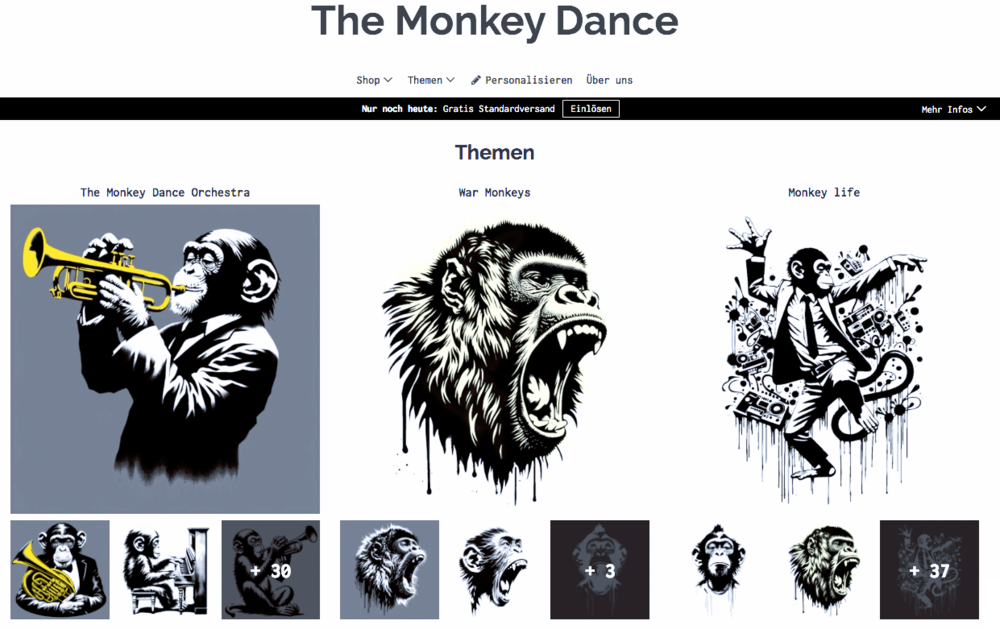
THE MONKEY DANCE
|
|
|


|
 |


Sponsoren, Förderer, Kooperationspartner

Children for a better world >> Förderung der AI Fair-Image Challenge
Fair-Image wird von CHILDREN JUGEND HILFT! gefördert und ist mit der deutschlandweiten AI Fair-Image Challenge SIEGERPROJEKT 2025. Alle Infos zur Challenge hier >>. Infos zum Camp25 gibt es hier. Wenn auch Ihr Euch ehrenamtlich engagiert und noch finanzielle Unterstützung für Eurer Projekt braucht, dann stellt gerne einen Antrag bei JUGEND HILFT.