

History Test
|
Introduction
Welcome to the world of Ancient Egypt, a civilization shaped by the Nile and guided by ideas of ma'at (order and justice). You'll explore daily life, religion, architecture, and writing. We'll refer to reliable sources like Wikipedia pages on Old Kingdom of Egypt, Middle Kingdom of Egypt, New Kingdom of Egypt, and Egyptian hieroglyphs.
Geography and Society
- The Nile Delta and the Black Land (fertile soil) versus Red Land.
- Irrigation canals supported surplus and craft specialization.
- Pharaoh as divine ruler; officials like Vizier organized labor and taxes.
Culture and Achievements
- Hieroglyph writing on temples and tombs; Papyrus for administration.
- Monumental building: Great Pyramid; Karnak and Luxor temples.
- Mummification aimed at afterlife; texts like the Book of the Dead.
Timeline Snapshot
- Old Kingdom (pyramids) → Middle Kingdom (reunification) → New Kingdom (empire).
- Notable rulers: Khufu, Hatshepsut, Akhenaten, Tutankhamun, Ramses II.
Interactive Tasks
Quiz: Test Your Knowledge
What natural cycle most shaped Egyptian agriculture? (Annual Nile flooding) (!Monsoon winds in India) (!Mediterranean tides) (!Saharan snow melt)
Ma'at refers to… (Order, balance, and justice) (!A pyramid-building tool) (!A military unit) (!A trading ship)
A vizier in Egypt was… (Chief official assisting the pharaoh) (!High priest of Amun only) (!Foreign ambassador) (!Slave overseer with royal blood)
Which material was key for writing? (Papyrus) (!Silk) (!Parchment) (!Clay tablets only)
Which structure is from the Old Kingdom? (Great Pyramid at Giza) (!Temple of Athena Nike) (!Great Wall) (!Colosseum)
Mummification aimed to… (Preserve the body for the afterlife) (!Create statues) (!Heal injuries) (!Store grain safely)
Hatshepsut is noted for… (Being a female pharaoh and builder) (!Defeating Julius Caesar) (!Writing the Ten Commandments) (!Inventing papermaking in China)
Akhenaten is associated with… (Religious reform focusing on Aten) (!Founding democracy in Athens) (!Building the Hanging Gardens) (!Crossing the Rubicon)
Tutankhamun is famous because… (His tomb was found largely intact) (!He ruled for 60 years) (!He conquered Mesopotamia) (!He wrote the Iliad)
Egyptian temples at Karnak and Luxor honor… (Amun and other deities) (!Zeus only) (!Odin) (!Quetzalcoatl)
Memory
| Nile | Lifeline river |
| Ma'at | Order and justice |
| Vizier | Chief administrator |
| Papyrus | Writing material |
| Mummification | Afterlife preparation |
Drag and Drop
| Assign the correct terms | Topic |
|---|---|
| Giza | Pyramids and the Sphinx |
| Valley of the Kings | New Kingdom royal burials |
| Karnak | Temple complex at Thebes |
| Delta | Fan-shaped fertile region |
| Hieroglyphs | Pictorial writing system |
Crossword Puzzle
| Pharaoh | Divine king of Egypt |
| Papyrus | Plant used for writing sheets |
| Karnak | Vast temple precinct at Thebes |
| Giza | Site of the Great Pyramid |
| Mummy | Preserved body for the afterlife |
| Scribe | Trained writer and record keeper |
LearningApps
Open Tasks
Easy
- Flood calendar: Make a 3-season Nile calendar (inundation, growth, harvest).
- Name cartouche: Write your name in hieroglyphs inside a cartouche.
- Jobs in Egypt: Create trading cards for Scribe, Farmer, Priest, Artisan.
- Artifact sketch: Draw a canopic jar with labels.
Standard
- Royal profile: Fact sheet on Hatshepsut or Ramses II with 6 reliable points.
- Cause and effect: How did the Nile shape politics, economy, and religion?
- Tomb design: Floor plan with security features and decoration themes.
- Trade routes: Map Egypt's contacts with Levant, Nubia, and Punt.
Hard
- Religious reform: Analyze Akhenaten's Atenism—motives and outcomes.
- Source critique: Evaluate tomb paintings as historical sources (limits/biases).
- Technology: Explain how quarrying and logistics enabled pyramid building.
- Continuity: Track ideas of ma'at from Old to New Kingdom governance.


Learning control
- Systems thinking: Link geography → surplus → state formation.
- Power and legitimacy: How did symbolism support pharaonic rule?
- Writing and administration: Why do complex states need records?
- Cultural diffusion: Identify Egyptian exchanges with neighbors.
- Historical empathy: Write a day in the life of a scribe and discuss choices.
OERs on the Topic
Media
.svg)

Links
|
Share - Discuss
Schulfach+

|
|
















aiMOOCs



aiMOOC Projekte

















|
|





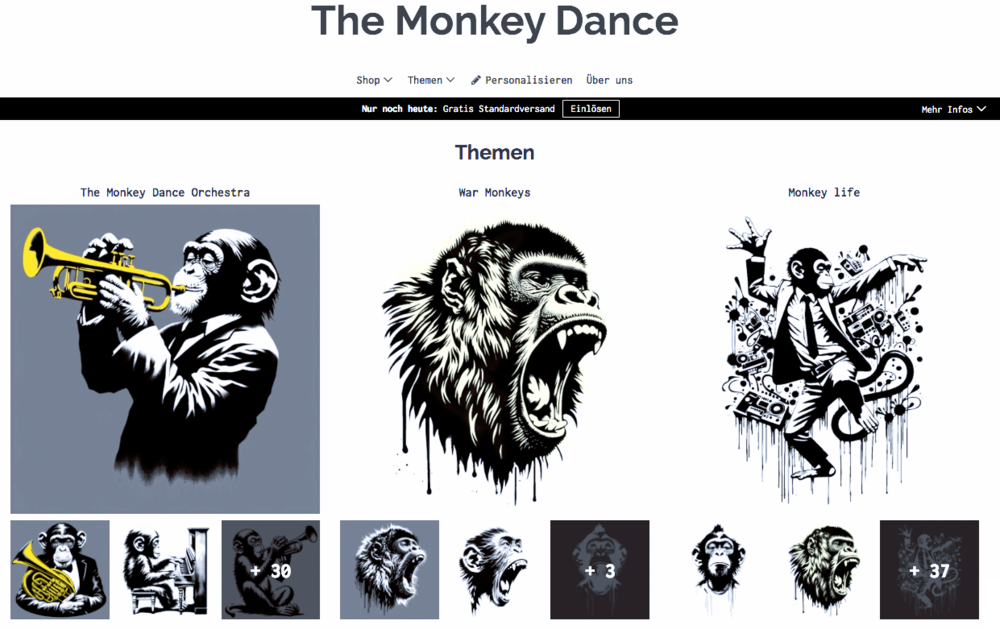
THE MONKEY DANCE

|
|
|



|
 |


Sponsoren, Förderer, Kooperationspartner

Children for a better world >> Förderung der AI Fair-Image Challenge
Fair-Image wird von CHILDREN JUGEND HILFT! gefördert und ist mit der deutschlandweiten AI Fair-Image Challenge SIEGERPROJEKT 2025. Alle Infos zur Challenge hier >>. Infos zum Camp25 gibt es hier. Wenn auch Ihr Euch ehrenamtlich engagiert und noch finanzielle Unterstützung für Eurer Projekt braucht, dann stellt gerne einen Antrag bei JUGEND HILFT.


```</text>
   </revision>
 </page>
 <page>
   <title>aiMOOC: Ancient Greece (Grades 6–8)</title>
   <ns>0</ns>
   <id>10003</id>
   <revision>
     <id>10003</id>
     <timestamp>2025-08-16T00:00:02Z</timestamp>
     <contributor>
       <username>50 aiMOOCs</username>
       <id>1</id>
     </contributor>
     <model>wikitext</model>
     <format>text/x-wiki</format>
     <text xml:space="preserve">```
History Test
|
Introduction
In Ancient Greece, small city-states (poleis) experimented with government forms like Democracy in Athens and Oligarchy in Sparta. Greek culture shaped Philosophy (e.g., Socrates, Plato, Aristotle), Theatre, Art, and Science. We reference Wikipedia entries such as Classical Greece, Athenian democracy, and Greek mythology.
Government and Society
- Ecclesia and Boule in Athenian democracy; limited citizenship.
- Sparta: dual kings, Gerousia, and militarized education (Agoge).
- Roles of Citizen, Metic, Slave.
Culture and Achievements
- Homeric epics, tragedy and comedy in Theatre of Dionysus.
- Olympic Games at Olympia.
- Rational inquiry: Philosophy and Mathematics (e.g., Euclid).
Wars and Expansion
- Persian Wars (Marathon, Salamis) united Greeks.
- Peloponnesian War weakened them.
- Alexander the Great spread Hellenistic culture.
Interactive Tasks
Quiz: Test Your Knowledge
What was the basic political unit of Greece? (Polis) (!Empire) (!Theme) (!Prefecture)
Which assembly met in Athens for citizen voting? (Ecclesia) (!Senate) (!Diet) (!Comitia)
Sparta was known for… (Militarized society and discipline) (!Naval trade supremacy only) (!Large coinage economy) (!Monotheism)
Who taught through questioning? (Socrates) (!Homer) (!Herodotus) (!Pericles)
Marathon and Salamis were battles in the… (Persian Wars) (!Peloponnesian War) (!Punic Wars) (!Crusades)
Which festival honored Zeus with athletics? (Olympic Games) (!Saturnalia) (!Panathenaea only for Athena) (!Dionysia only for theater)
Non-citizen long-term residents in Athens were called… (Metics) (!Helots) (!Patricians) (!Plebeians)
Athenian democracy excluded… (Women, slaves, and most foreigners) (!All artisans) (!All farmers) (!All sailors)
Who created a large empire spreading Hellenistic culture? (Alexander the Great) (!Hannibal) (!Julius Caesar) (!Ashoka)
Greek comedies and tragedies were performed at… (Theatre of Dionysus) (!Colosseum) (!Globe Theatre) (!Basilica of Maxentius)
Memory
| Polis | City-state |
| Ecclesia | Citizen assembly |
| Hoplite | Heavily armed infantryman |
| Tragedy | Serious stage play |
| Hellenistic | Era after Alexander |
Drag and Drop
| Assign the correct terms | Topic |
|---|---|
| Athens | Democracy and navy |
| Sparta | Military oligarchy |
| Marathon | Victory in 490 BCE |
| Salamis | Naval battle near Athens |
| Olympia | Pan-Hellenic games |
Crossword Puzzle
| Democracy | Rule by citizens in assemblies |
| Hoplite | Citizen soldier with shield and spear |
| Helot | Spartan serf class |
| Agora | Central market and meeting place |
| Acropolis | Fortified hilltop in a city |
| Trireme | Fast oared warship |
LearningApps
Open Tasks
Easy
- Vase art: Draw a black-figure vase scene of daily life.
- Citizen card: Create a citizenship card listing rights and limits.
- Myth retelling: Rewrite a short myth in modern language.
- Theater mask: Design a mask for tragedy or comedy.
Standard
- Debate: Should Athens pay jurors? Prepare pro & con notes.
- Battle storyboard: Sequence Marathon or Salamis in 6 frames.
- Law and order: Compare Athenian courts with today's jury trials.
- Map task: Label key poleis and battle sites.
Hard
- Constitution design: Propose a balanced polis constitution (roles, checks).
- Gender roles: Contrast women's lives in Athens vs. Sparta with sources.
- Empire analysis: Evaluate benefits and costs of Alexander's conquests.
- Historiography: Compare Herodotus and Thucydides approaches.
Learning control
- Institutions: Explain how Athenian bodies shared power.
- Economy: Link trade, coinage, and naval strength.
- Society: Discuss slavery's role in both Athens and Sparta.
- Culture: Connect philosophy to civic life.
- Conflict: Analyze causes and effects of the Peloponnesian War.
OERs on the Topic
Media


Links
|
Share - Discuss
Schulfach+
|
|
aiMOOCs
aiMOOC Projekte
|
|
THE MONKEY DANCE
|
|
|
|
|
Sponsoren, Förderer, Kooperationspartner
Children for a better world >> Förderung der AI Fair-Image Challenge
Fair-Image wird von CHILDREN JUGEND HILFT! gefördert und ist mit der deutschlandweiten AI Fair-Image Challenge SIEGERPROJEKT 2025. Alle Infos zur Challenge hier >>. Infos zum Camp25 gibt es hier. Wenn auch Ihr Euch ehrenamtlich engagiert und noch finanzielle Unterstützung für Eurer Projekt braucht, dann stellt gerne einen Antrag bei JUGEND HILFT.
```</text>
   </revision>
 </page>
 <page>
   <title>aiMOOC: Ancient Rome (Grades 6–8)</title>
   <ns>0</ns>
   <id>10004</id>
   <revision>
     <id>10004</id>
     <timestamp>2025-08-16T00:00:03Z</timestamp>
     <contributor>
       <username>50 aiMOOCs</username>
       <id>1</id>
     </contributor>
     <model>wikitext</model>
     <format>text/x-wiki</format>
     <text xml:space="preserve">```
History Test
Introduction
From the Roman Kingdom to the Roman Republic and the Roman Empire, Rome shaped politics, law, language, and engineering across Europe and the Mediterranean. We'll refer to Wikipedia articles like Roman Republic, Roman Empire, and Roman law.
Government and Law
- The Republic balanced Magistrates (two consuls) with the Senate and popular assemblies.
- The Twelve Tables were an early public legal code.
- Imperial cult and emperors from Augustus to Trajan and beyond.
Society and Economy
- Patricians and Plebeians; slavery.
- Trade across Mediterranean routes; common coinage like Denarius.
- Bread and circuses: Colosseum games and public baths.
Technology and Legacy
- Aqueducts delivered water; Roman roads connected provinces.
- Concrete enabled arches, vaults, and the Pantheon.
- Latin influenced Romance languages; legal principles shaped modern law.
Interactive Tasks
Quiz: Test Your Knowledge
Which office led the Roman Republic each year? (Consuls) (!Praetorians) (!Dictators for life) (!Censors only)
The Twelve Tables were… (A published set of Roman laws) (!A dining custom) (!A list of emperors) (!A temple inventory)
Who became the first emperor? (Augustus) (!Julius Caesar as emperor) (!Hadrian) (!Nero the Great)
Pax Romana refers to… (A long period of relative peace) (!A gladiator school) (!A tax on salt) (!A type of Roman ship)
Roman concrete helped build the… (Pantheon) (!Great Pyramid) (!Hagia Sophia only) (!Great Wall)
What did aqueducts transport? (Water) (!Grain) (!Soldiers) (!Marble)
Patricians and plebeians were… (Social orders in Rome) (!Tribes in Gaul) (!Greek city-states) (!Religious sects only)
Bread and circuses aimed to… (Keep urban masses content) (!Feed the army only) (!Build roads faster) (!Strengthen the Senate)
Which structure hosted gladiator games? (Colosseum) (!Circus Maximus only for chariot races) (!Forum of Trajan) (!Ara Pacis)
Latin is important because… (It is the root of Romance languages) (!It replaced all Greek instantly) (!It is identical to Sanskrit) (!It is a secret code)
Memory
| Consul | Elected chief magistrate |
| Senate | Council of elders |
| Aqueduct | Water conduit |
| Pantheon | Temple with large dome |
| Denarius | Silver coin |
Drag and Drop
| Assign the correct terms | Topic |
|---|---|
| Republic | Mixed constitution |
| Empire | Rule by emperor |
| Pax Romana | Two centuries of stability |
| Roads | "All roads lead to Rome" |
| Colosseum | Amphitheater for spectacles |
Crossword Puzzle
| Tribune | Plebeian protector with veto |
| Forum | Central public square |
| Legion | Large Roman military unit |
| Limes | Frontier fortification system |
| Villa | Country estate and farm |
| Edict | Official proclamation |
LearningApps
Open Tasks
Easy
- Coin design: Create a denarius with emperor portrait and legend.
- Road map: Draw a mini-map linking three provinces by roads.
- Bath routine: Sequence a visit to a Roman bath.
- Forum poster: Poster showing functions of the Roman Forum.
Standard
- Legal case: Write a short dispute and judge it using Twelve Tables ideas.
- Engineer it: Model a simple arch using cardboard and explain forces.
- Biography: Profile Augustus or Trajan—policies and image-making.
- Province study: Describe one province's resources and role.
Hard
- Crisis analysis: Examine factors in the third-century crisis.
- Cultural exchange: Assess how Rome blended with local cultures.
- Law legacy: Trace one Roman legal principle into modern law.
- Urban planning: Evaluate a Roman city grid for services and defense.
Learning control
- Power balance: Chart checks and balances in the Republic.
- Scale and connectivity: Explain how roads improved governance.
- Economy and society: Link slavery, trade, and urban life.
- Continuity and change: Compare Republic vs. Empire institutions.
- Cause and effect: Identify reasons for Rome's expansion and limits.
OERs on the Topic
Media


Links
|
Share - Discuss
Schulfach+
|
|
aiMOOCs
aiMOOC Projekte
|
|
THE MONKEY DANCE
|
|
|
|
|
Sponsoren, Förderer, Kooperationspartner
Children for a better world >> Förderung der AI Fair-Image Challenge
Fair-Image wird von CHILDREN JUGEND HILFT! gefördert und ist mit der deutschlandweiten AI Fair-Image Challenge SIEGERPROJEKT 2025. Alle Infos zur Challenge hier >>. Infos zum Camp25 gibt es hier. Wenn auch Ihr Euch ehrenamtlich engagiert und noch finanzielle Unterstützung für Eurer Projekt braucht, dann stellt gerne einen Antrag bei JUGEND HILFT.
```</text>
   </revision>
 </page>
 <page>
   <title>aiMOOC: Middle Ages in Europe (Grades 7–9)</title>
   <ns>0</ns>
   <id>10005</id>
   <revision>
     <id>10005</id>
     <timestamp>2025-08-16T00:00:04Z</timestamp>
     <contributor>
       <username>50 aiMOOCs</username>
       <id>1</id>
     </contributor>
     <model>wikitext</model>
     <format>text/x-wiki</format>
     <text xml:space="preserve">```
History Test
|
Introduction
The Middle Ages (c. 500–1500) were dynamic: from early medieval fragmentation to high medieval growth and late medieval crises. We'll examine Feudalism, Manorialism, the role of the Catholic Church, urbanization, and learning at universities. Wikipedia articles such as Medieval Europe, Feudalism, and Black Death provide background.
Structures of Power and Economy
- Feudal contract bound lords and vassals; Serfs worked the land.
- Manors were economic units with fields, commons, and dues.
- Guilds regulated crafts; fairs boosted trade (e.g., Champagne fairs).
Culture and Religion
- Monasticism preserved texts; Cathedrals showed Gothic architecture.
- Pilgrimage routes like Camino de Santiago.
- Crusades as religious wars with complex motives and impacts.
Change and Crisis
- Growth in 1000–1300: population, towns, and universities.
- Hundred Years' War and Black Death reshaped society.
- State formation in France, England, Holy Roman Empire.
Interactive Tasks
Quiz: Test Your Knowledge
What is a fief? (Land granted for service) (!A medieval tax on salt only) (!A type of sword) (!A monastery rule)
Serfs were… (Dependent peasants bound to the land) (!Free knights) (!Traveling merchants) (!Town mayors)
Guilds mainly… (Regulated quality and training in trades) (!Led crusading armies) (!Collected church tithes) (!Built castles for kings only)
Gothic cathedrals are known for… (Pointed arches and stained glass) (!Domes of concrete) (!Hanging gardens) (!Neolithic stones)
The Black Death was… (A devastating plague in the 14th century) (!A crop failure in Mesopotamia) (!A Viking ship) (!A castle defense)
A vassal owed a lord… (Military and counsel in return for land) (!Only cash taxes) (!No duties at all) (!Solemn silence)
Universities emerged in… (High Middle Ages) (!Neolithic) (!Early Bronze Age) (!Industrial Revolution)
Pilgrimage to Santiago visited… (Compostela) (!Alexandria) (!Mecca in this context) (!Tenochtitlan)
Which was a major long war between England and France? (Hundred Years' War) (!Peloponnesian War) (!Punic Wars) (!Thirty Days' War)
Town charters often granted… (Rights and freedoms to citizens) (!Royal titles to everyone) (!Free castles) (!Knighthood by birth)
Memory
| Fief | Land for service |
| Vassal | Lord's sworn follower |
| Serf | Unfree peasant |
| Guild | Trade association |
| Cathedral | Bishop's church |
Drag and Drop
| Assign the correct terms | Topic |
|---|---|
| Manor | Economic base of rural life |
| Crusade | Armed pilgrimage |
| Black Death | Plague pandemic |
| Guild | Crafts regulation |
| University | Higher learning community |
Crossword Puzzle
| Fealty | Oath binding vassal to lord |
| Tithe | Church tax of one tenth |
| Nave | Central aisle of a church |
| Keep | Strongest tower in a castle |
| Charter | Document granting town rights |
| Journeyman | Trained worker after apprenticeship |
LearningApps
Open Tasks
Easy
- Coat of arms: Design a heraldic shield with meaning.
- Manor map: Sketch a manor showing strips, commons, and the mill.
- Cathedral window: Create a stained-glass pattern telling a story.
- Market list: List goods sold at a medieval fair.
Standard
- Feudal diagram: Flowchart of obligations lord ↔ vassal ↔ serf.
- Diary: Write a week in the life of a guild apprentice.
- Town charter: Draft three rights and two duties for townspeople.
- Pilgrimage route: Map stages on the Camino de Santiago.
Hard
- War and society: Analyze impacts of the Hundred Years' War.
- Pandemic effects: Explain how the Black Death changed wages and mobility.
- Church and state: Evaluate conflicts over investiture.
- Architecture study: Compare Romanesque and Gothic features.
Learning control
- Systems: Connect manor economy to feudal politics.
- Continuity/Change: What persisted from early to late Middle Ages?
- Causation: Trace causes and results of urban growth.
- Evidence: Use building features to infer cathedral functions.
- Comparison: Town vs. countryside opportunities and limits.
OERs on the Topic
Media


Links
|
Share - Discuss
Schulfach+
|
|
aiMOOCs
aiMOOC Projekte
|
|
THE MONKEY DANCE
|
|
|
|
|
Sponsoren, Förderer, Kooperationspartner
Children for a better world >> Förderung der AI Fair-Image Challenge
Fair-Image wird von CHILDREN JUGEND HILFT! gefördert und ist mit der deutschlandweiten AI Fair-Image Challenge SIEGERPROJEKT 2025. Alle Infos zur Challenge hier >>. Infos zum Camp25 gibt es hier. Wenn auch Ihr Euch ehrenamtlich engagiert und noch finanzielle Unterstützung für Eurer Projekt braucht, dann stellt gerne einen Antrag bei JUGEND HILFT.
```</text>
   </revision>
 </page>
 <page>
   <title>aiMOOC: The Renaissance in Europe (Grades 8–10)</title>
   <ns>0</ns>
   <id>10006</id>
   <revision>
     <id>10006</id>
     <timestamp>2025-08-16T00:00:05Z</timestamp>
     <contributor>
       <username>50 aiMOOCs</username>
       <id>1</id>
     </contributor>
     <model>wikitext</model>
     <format>text/x-wiki</format>
     <text xml:space="preserve">```
History Test
Renaissance in Europe
|
Introduction
The Renaissance (c. 14th–16th centuries) marked a cultural "rebirth" in Italy and beyond, emphasizing Humanism—the study of classical texts and human potential. It transformed Art, Science, and communication through the printing press. We draw on Wikipedia articles like Italian Renaissance, Northern Renaissance, and Renaissance humanism.
Ideas and Culture
- Humanist learning of Latin and Greek authors; civic humanism in Florence.
- Artists like Leonardo da Vinci, Michelangelo, and Raphael developed Linear perspective.
- Patronage by families (e.g., Medici) and popes.
Science, Technology, and Exploration
- Johannes Gutenberg's movable type accelerated knowledge spread.
- Nicolaus Copernicus proposed heliocentrism; later Galileo Galilei.
- Voyages by Christopher Columbus, Vasco da Gama, Ferdinand Magellan linked continents.
Society and Change
- Growth of literacy, universities, and vernacular literature (e.g., Dante Alighieri).
- Tensions with religion set the stage for the Reformation.
- Artistic diffusion to the Low Countries and Holy Roman Empire.
Interactive Tasks
Quiz: Test Your Knowledge
Humanism focused on… (Studying classical texts and human potential) (!Alchemy for immortality) (!Only military training) (!Complete rejection of religion)
Which innovation transformed book production? (Movable type printing press) (!Water clocks) (!Gunpowder) (!Steam engines)
Linear perspective allowed artists to… (Create depth on flat surfaces) (!Mix oil paints) (!Carve marble) (!Cast bronze)
Which city is closely linked to the Medici? (Florence) (!London) (!Athens) (!Moscow)
Copernicus argued that… (The Earth orbits the Sun) (!The Sun orbits the Earth) (!The Earth is flat) (!Stars are lanterns)
Michelangelo worked on the… (Sistine Chapel ceiling) (!Parthenon frieze) (!Great Wall) (!Eiffel Tower)
Gutenberg’s key contribution was… (Movable metal type) (!Papyrus making) (!Magnetic compass) (!Glassblowing)
A major result of exploration was… (Expanded global trade and exchange) (!Immediate worldwide peace) (!End of slavery) (!Disappearance of diseases)
Raphael is famous for… (School of Athens) (!Mona Lisa) (!Night Watch) (!Starry Night)
Vernacular literature means… (Works written in local languages) (!Only in Latin) (!Only poetry) (!Only religious texts)
Memory
| Humanism | Classical learning |
| Perspective | Depth illusion |
| Gutenberg | Movable type |
| Copernicus | Heliocentrism |
| Medici | Patrons of Florence |
Drag and Drop
| Assign the correct terms | Topic |
|---|---|
| Florence | Center of Italian Renaissance |
| Printing press | Faster spread of ideas |
| Sistine Chapel | Frescoes by Michelangelo |
| School of Athens | Painting by Raphael |
| Heliocentrism | Sun at the center |
Crossword Puzzle
| Patron | Wealthy supporter of artists |
| Fresco | Painting on wet plaster |
| Sonnet | Fourteen-line poem form |
| Workshop | Studio for training artists |
| Anatomy | Study of body structure |
| Chiaroscuro | Light-dark shading technique |
LearningApps
Open Tasks
Easy
- Artist card: Make profile cards for Leonardo, Michelangelo, and Raphael.
- Perspective grid: Draw a street using one-point perspective.
- Printing demo: Stamp letters to simulate movable type.
- Vocabulary: Define 8 key terms (patron, fresco, sonnet, etc.).
Standard
- Source study: Compare a humanist letter with a medieval scholastic text.
- Patronage analysis: How did Medici support shape art and politics?
- Map exploration: Plot exploration routes and outcomes.
- Science shift: Explain why heliocentrism challenged existing views.
Hard
- Network essay: Argue how print networks changed Europe's information flow.
- Art critique: Analyze composition and symbolism in one Renaissance painting.
- Global impacts: Evaluate consequences of 1492 for different peoples.
- Continuity: Identify medieval elements that persisted into the Renaissance.
Learning control
- Causation: Link printing to literacy, religion, and science.
- Comparison: Italian vs. Northern Renaissance styles and themes.
- Evidence: Use visual sources to infer patron goals.
- Context: Situate humanism within city-state politics.
- Long-term change: Track how Renaissance ideas echo today.
OERs on the Topic
Media


Links
Renaissance in Europe
|
Share - Discuss
Schulfach+
|
|
aiMOOCs
aiMOOC Projekte
|
|
THE MONKEY DANCE
|
|
|
|
|
Sponsoren, Förderer, Kooperationspartner
Children for a better world >> Förderung der AI Fair-Image Challenge
Fair-Image wird von CHILDREN JUGEND HILFT! gefördert und ist mit der deutschlandweiten AI Fair-Image Challenge SIEGERPROJEKT 2025. Alle Infos zur Challenge hier >>. Infos zum Camp25 gibt es hier. Wenn auch Ihr Euch ehrenamtlich engagiert und noch finanzielle Unterstützung für Eurer Projekt braucht, dann stellt gerne einen Antrag bei JUGEND HILFT.
History Test
|
Introduction
Welcome to the world of Ancient Egypt, a civilization shaped by the Nile and guided by ideas of ma'at (order and justice). You'll explore daily life, religion, architecture, and writing. We'll refer to reliable sources like Wikipedia pages on Old Kingdom of Egypt, Middle Kingdom of Egypt, New Kingdom of Egypt, and Egyptian hieroglyphs.
Geography and Society
- The Nile Delta and the Black Land (fertile soil) versus Red Land.
- Irrigation canals supported surplus and craft specialization.
- Pharaoh as divine ruler; officials like Vizier organized labor and taxes.
Culture and Achievements
- Hieroglyph writing on temples and tombs; Papyrus for administration.
- Monumental building: Great Pyramid; Karnak and Luxor temples.
- Mummification aimed at afterlife; texts like the Book of the Dead.
Timeline Snapshot
- Old Kingdom (pyramids) → Middle Kingdom (reunification) → New Kingdom (empire).
- Notable rulers: Khufu, Hatshepsut, Akhenaten, Tutankhamun, Ramses II.
Interactive Tasks
Quiz: Test Your Knowledge
What natural cycle most shaped Egyptian agriculture? (Annual Nile flooding) (!Monsoon winds in India) (!Mediterranean tides) (!Saharan snow melt)
Ma'at refers to… (Order, balance, and justice) (!A pyramid-building tool) (!A military unit) (!A trading ship)
A vizier in Egypt was… (Chief official assisting the pharaoh) (!High priest of Amun only) (!Foreign ambassador) (!Slave overseer with royal blood)
Which material was key for writing? (Papyrus) (!Silk) (!Parchment) (!Clay tablets only)
Which structure is from the Old Kingdom? (Great Pyramid at Giza) (!Temple of Athena Nike) (!Great Wall) (!Colosseum)
Mummification aimed to… (Preserve the body for the afterlife) (!Create statues) (!Heal injuries) (!Store grain safely)
Hatshepsut is noted for… (Being a female pharaoh and builder) (!Defeating Julius Caesar) (!Writing the Ten Commandments) (!Inventing papermaking in China)
Akhenaten is associated with… (Religious reform focusing on Aten) (!Founding democracy in Athens) (!Building the Hanging Gardens) (!Crossing the Rubicon)
Tutankhamun is famous because… (His tomb was found largely intact) (!He ruled for 60 years) (!He conquered Mesopotamia) (!He wrote the Iliad)
Egyptian temples at Karnak and Luxor honor… (Amun and other deities) (!Zeus only) (!Odin) (!Quetzalcoatl)
Memory
| Nile | Lifeline river |
| Ma'at | Order and justice |
| Vizier | Chief administrator |
| Papyrus | Writing material |
| Mummification | Afterlife preparation |
<br>
Drag and Drop
| Assign the correct terms | Topic |
|---|---|
| Giza | Pyramids and the Sphinx |
| Valley of the Kings | New Kingdom royal burials |
| Karnak | Temple complex at Thebes |
| Delta | Fan-shaped fertile region |
| Hieroglyphs | Pictorial writing system |
<br>
Crossword Puzzle
| Pharaoh | Divine king of Egypt |
| Papyrus | Plant used for writing sheets |
| Karnak | Vast temple precinct at Thebes |
| Giza | Site of the Great Pyramid |
| Mummy | Preserved body for the afterlife |
| Scribe | Trained writer and record keeper |
<br>
LearningApps
<iframe> https://learningapps.org/index.php?s=Ancient+Egypt </iframe>
<br>
Open Tasks
Easy
- Flood calendar: Make a 3-season Nile calendar (inundation, growth, harvest).
- Name cartouche: Write your name in hieroglyphs inside a cartouche.
- Jobs in Egypt: Create trading cards for Scribe, Farmer, Priest, Artisan.
- Artifact sketch: Draw a canopic jar with labels.
<br>
Standard
- Royal profile: Fact sheet on Hatshepsut or Ramses II with 6 reliable points.
- Cause and effect: How did the Nile shape politics, economy, and religion?
- Tomb design: Floor plan with security features and decoration themes.
- Trade routes: Map Egypt's contacts with Levant, Nubia, and Punt.
<br>
Hard
- Religious reform: Analyze Akhenaten's Atenism—motives and outcomes.
- Source critique: Evaluate tomb paintings as historical sources (limits/biases).
- Technology: Explain how quarrying and logistics enabled pyramid building.
- Continuity: Track ideas of ma'at from Old to New Kingdom governance.
<br>
Learning control
- Systems thinking: Link geography → surplus → state formation.
- Power and legitimacy: How did symbolism support pharaonic rule?
- Writing and administration: Why do complex states need records?
- Cultural diffusion: Identify Egyptian exchanges with neighbors.
- Historical empathy: Write a day in the life of a scribe and discuss choices.
<br><br>
OERs on the Topic
Media
Links
|
Share - Discuss
Schulfach+
|
|
aiMOOCs
aiMOOC Projekte
|
|
THE MONKEY DANCE
|
|
|
|
|
Sponsoren, Förderer, Kooperationspartner
Children for a better world >> Förderung der AI Fair-Image Challenge
Fair-Image wird von CHILDREN JUGEND HILFT! gefördert und ist mit der deutschlandweiten AI Fair-Image Challenge SIEGERPROJEKT 2025. Alle Infos zur Challenge hier >>. Infos zum Camp25 gibt es hier. Wenn auch Ihr Euch ehrenamtlich engagiert und noch finanzielle Unterstützung für Eurer Projekt braucht, dann stellt gerne einen Antrag bei JUGEND HILFT.
```</text>
   </revision>
 </page>
 <page>
   <title>aiMOOC: Ancient Greece (Grades 6–8)</title>
   <revision>
     <text xml:space="preserve">```
History Test
|
Introduction
In Ancient Greece, small city-states (poleis) experimented with government forms like Democracy in Athens and Oligarchy in Sparta. Greek culture shaped Philosophy (e.g., Socrates, Plato, Aristotle), Theatre, Art, and Science. We reference Wikipedia entries such as Classical Greece, Athenian democracy, and Greek mythology.
Government and Society
- Ecclesia and Boule in Athenian democracy; limited citizenship.
- Sparta: dual kings, Gerousia, and militarized education (Agoge).
- Roles of Citizen, Metic, Slave.
Culture and Achievements
- Homeric epics, tragedy and comedy in Theatre of Dionysus.
- Olympic Games at Olympia.
- Rational inquiry: Philosophy and Mathematics (e.g., Euclid).
Wars and Expansion
- Persian Wars (Marathon, Salamis) united Greeks.
- Peloponnesian War weakened them.
- Alexander the Great spread Hellenistic culture.
Interactive Tasks
Quiz: Test Your Knowledge
What was the basic political unit of Greece? (Polis) (!Empire) (!Theme) (!Prefecture)
Which assembly met in Athens for citizen voting? (Ecclesia) (!Senate) (!Diet) (!Comitia)
Sparta was known for… (Militarized society and discipline) (!Naval trade supremacy only) (!Large coinage economy) (!Monotheism)
Who taught through questioning? (Socrates) (!Homer) (!Herodotus) (!Pericles)
Marathon and Salamis were battles in the… (Persian Wars) (!Peloponnesian War) (!Punic Wars) (!Crusades)
Which festival honored Zeus with athletics? (Olympic Games) (!Saturnalia) (!Panathenaea only for Athena) (!Dionysia only for theater)
Non-citizen long-term residents in Athens were called… (Metics) (!Helots) (!Patricians) (!Plebeians)
Athenian democracy excluded… (Women, slaves, and most foreigners) (!All artisans) (!All farmers) (!All sailors)
Who created a large empire spreading Hellenistic culture? (Alexander the Great) (!Hannibal) (!Julius Caesar) (!Ashoka)
Greek comedies and tragedies were performed at… (Theatre of Dionysus) (!Colosseum) (!Globe Theatre) (!Basilica of Maxentius)
Memory
| Polis | City-state |
| Ecclesia | Citizen assembly |
| Hoplite | Heavily armed infantryman |
| Tragedy | Serious stage play |
| Hellenistic | Era after Alexander |
<br>
Drag and Drop
| Assign the correct terms | Topic |
|---|---|
| Athens | Democracy and navy |
| Sparta | Military oligarchy |
| Marathon | Victory in 490 BCE |
| Salamis | Naval battle near Athens |
| Olympia | Pan-Hellenic games |
<br>
Crossword Puzzle
| Democracy | Rule by citizens in assemblies |
| Hoplite | Citizen soldier with shield and spear |
| Helot | Spartan serf class |
| Agora | Central market and meeting place |
| Acropolis | Fortified hilltop in a city |
| Trireme | Fast oared warship |
<br>
LearningApps
<iframe> https://learningapps.org/index.php?s=Ancient+Greece </iframe>
<br>
Open Tasks
Easy
- Vase art: Draw a black-figure vase scene of daily life.
- Citizen card: Create a citizenship card listing rights and limits.
- Myth retelling: Rewrite a short myth in modern language.
- Theater mask: Design a mask for tragedy or comedy.
<br>
Standard
- Debate: Should Athens pay jurors? Prepare pro & con notes.
- Battle storyboard: Sequence Marathon or Salamis in 6 frames.
- Law and order: Compare Athenian courts with today's jury trials.
- Map task: Label key poleis and battle sites.
<br>
Hard
- Constitution design: Propose a balanced polis constitution (roles, checks).
- Gender roles: Contrast women's lives in Athens vs. Sparta with sources.
- Empire analysis: Evaluate benefits and costs of Alexander's conquests.
- Historiography: Compare Herodotus and Thucydides approaches.
<br>
Learning control
- Institutions: Explain how Athenian bodies shared power.
- Economy: Link trade, coinage, and naval strength.
- Society: Discuss slavery's role in both Athens and Sparta.
- Culture: Connect philosophy to civic life.
- Conflict: Analyze causes and effects of the Peloponnesian War.
<br><br>
OERs on the Topic
<iframe> https://en.m.wikipedia.org/wiki/Ancient_Greece </iframe>
<br>
Media
Links
|
Share - Discuss
Schulfach+
|
|
aiMOOCs
aiMOOC Projekte
|
|
THE MONKEY DANCE
|
|
|
|
|
Sponsoren, Förderer, Kooperationspartner
Children for a better world >> Förderung der AI Fair-Image Challenge
Fair-Image wird von CHILDREN JUGEND HILFT! gefördert und ist mit der deutschlandweiten AI Fair-Image Challenge SIEGERPROJEKT 2025. Alle Infos zur Challenge hier >>. Infos zum Camp25 gibt es hier. Wenn auch Ihr Euch ehrenamtlich engagiert und noch finanzielle Unterstützung für Eurer Projekt braucht, dann stellt gerne einen Antrag bei JUGEND HILFT.
```</text>
   </revision>
 </page>
 <page>
   <title>aiMOOC: Ancient Rome (Grades 6–8)</title>
   <revision>
     <text xml:space="preserve">```
History Test
Introduction
From the Roman Kingdom to the Roman Republic and the Roman Empire, Rome shaped politics, law, language, and engineering across Europe and the Mediterranean. We'll refer to Wikipedia articles like Roman Republic, Roman Empire, and Roman law.
Government and Law
- The Republic balanced Magistrates (two consuls) with the Senate and popular assemblies.
- The Twelve Tables were an early public legal code.
- Imperial cult and emperors from Augustus to Trajan and beyond.
Society and Economy
- Patricians and Plebeians; slavery.
- Trade across Mediterranean routes; common coinage like Denarius.
- Bread and circuses: Colosseum games and public baths.
Technology and Legacy
- Aqueducts delivered water; Roman roads connected provinces.
- Concrete enabled arches, vaults, and the Pantheon.
- Latin influenced Romance languages; legal principles shaped modern law.
Interactive Tasks
Quiz: Test Your Knowledge
Which office led the Roman Republic each year? (Consuls) (!Praetorians) (!Dictators for life) (!Censors only)
The Twelve Tables were… (A published set of Roman laws) (!A dining custom) (!A list of emperors) (!A temple inventory)
Who became the first emperor? (Augustus) (!Julius Caesar as emperor) (!Hadrian) (!Nero the Great)
Pax Romana refers to… (A long period of relative peace) (!A gladiator school) (!A tax on salt) (!A type of Roman ship)
Roman concrete helped build the… (Pantheon) (!Great Pyramid) (!Hagia Sophia only) (!Great Wall)
What did aqueducts transport? (Water) (!Grain) (!Soldiers) (!Marble)
Patricians and plebeians were… (Social orders in Rome) (!Tribes in Gaul) (!Greek city-states) (!Religious sects only)
Bread and circuses aimed to… (Keep urban masses content) (!Feed the army only) (!Build roads faster) (!Strengthen the Senate)
Which structure hosted gladiator games? (Colosseum) (!Circus Maximus only for chariot races) (!Forum of Trajan) (!Ara Pacis)
Latin is important because… (It is the root of Romance languages) (!It replaced all Greek instantly) (!It is identical to Sanskrit) (!It is a secret code)
Memory
| Consul | Elected chief magistrate |
| Senate | Council of elders |
| Aqueduct | Water conduit |
| Pantheon | Temple with large dome |
| Denarius | Silver coin |
<br>
Drag and Drop
| Assign the correct terms | Topic |
|---|---|
| Republic | Mixed constitution |
| Empire | Rule by emperor |
| Pax Romana | Two centuries of stability |
| Roads | "All roads lead to Rome" |
| Colosseum | Amphitheater for spectacles |
<br>
Crossword Puzzle
| Tribune | Plebeian protector with veto |
| Forum | Central public square |
| Legion | Large Roman military unit |
| Limes | Frontier fortification system |
| Villa | Country estate and farm |
| Edict | Official proclamation |
<br>
LearningApps
Open Tasks
Easy
- Coin design: Create a denarius with emperor portrait and legend.
- Road map: Draw a mini-map linking three provinces by roads.
- Bath routine: Sequence a visit to a Roman bath.
- Forum poster: Poster showing functions of the Roman Forum.
<br>
Standard
- Legal case: Write a short dispute and judge it using Twelve Tables ideas.
- Engineer it: Model a simple arch using cardboard and explain forces.
- Biography: Profile Augustus or Trajan—policies and image-making.
- Province study: Describe one province's resources and role.
<br>
Hard
- Crisis analysis: Examine factors in the third-century crisis.
- Cultural exchange: Assess how Rome blended with local cultures.
- Law legacy: Trace one Roman legal principle into modern law.
- Urban planning: Evaluate a Roman city grid for services and defense.
<br>
Learning control
- Power balance: Chart checks and balances in the Republic.
- Scale and connectivity: Explain how roads improved governance.
- Economy and society: Link slavery, trade, and urban life.
- Continuity and change: Compare Republic vs. Empire institutions.
- Cause and effect: Identify reasons for Rome's expansion and limits.
<br><br>
OERs on the Topic
Media
Links
|
Share - Discuss
Schulfach+
|
|
aiMOOCs
aiMOOC Projekte
|
|
THE MONKEY DANCE
|
|
|
|
|
Sponsoren, Förderer, Kooperationspartner
Children for a better world >> Förderung der AI Fair-Image Challenge
Fair-Image wird von CHILDREN JUGEND HILFT! gefördert und ist mit der deutschlandweiten AI Fair-Image Challenge SIEGERPROJEKT 2025. Alle Infos zur Challenge hier >>. Infos zum Camp25 gibt es hier. Wenn auch Ihr Euch ehrenamtlich engagiert und noch finanzielle Unterstützung für Eurer Projekt braucht, dann stellt gerne einen Antrag bei JUGEND HILFT.
```</text>
   </revision>
 </page>
 <page>
   <title>aiMOOC: Middle Ages in Europe (Grades 7–9)</title>
   <revision>
     <text xml:space="preserve">```
History Test
|
Introduction
The Middle Ages (c. 500–1500) were dynamic: from early medieval fragmentation to high medieval growth and late medieval crises. We'll examine Feudalism, Manorialism, the role of the Catholic Church, urbanization, and learning at universities. Wikipedia articles such as Medieval Europe, Feudalism, and Black Death provide background.
Structures of Power and Economy
- Feudal contract bound lords and vassals; Serfs worked the land.
- Manors were economic units with fields, commons, and dues.
- Guilds regulated crafts; fairs boosted trade (e.g., Champagne fairs).
Culture and Religion
- Monasticism preserved texts; Cathedrals showed Gothic architecture.
- Pilgrimage routes like Camino de Santiago.
- Crusades as religious wars with complex motives and impacts.
Change and Crisis
- Growth in 1000–1300: population, towns, and universities.
- Hundred Years' War and Black Death reshaped society.
- State formation in France, England, Holy Roman Empire.
Interactive Tasks
Quiz: Test Your Knowledge
What is a fief? (Land granted for service) (!A medieval tax on salt only) (!A type of sword) (!A monastery rule)
Serfs were… (Dependent peasants bound to the land) (!Free knights) (!Traveling merchants) (!Town mayors)
Guilds mainly… (Regulated quality and training in trades) (!Led crusading armies) (!Collected church tithes) (!Built castles for kings only)
Gothic cathedrals are known for… (Pointed arches and stained glass) (!Domes of concrete) (!Hanging gardens) (!Neolithic stones)
The Black Death was… (A devastating plague in the 14th century) (!A crop failure in Mesopotamia) (!A Viking ship) (!A castle defense)
A vassal owed a lord… (Military and counsel in return for land) (!Only cash taxes) (!No duties at all) (!Solemn silence)
Universities emerged in… (High Middle Ages) (!Neolithic) (!Early Bronze Age) (!Industrial Revolution)
Pilgrimage to Santiago visited… (Compostela) (!Alexandria) (!Mecca in this context) (!Tenochtitlan)
Which was a major long war between England and France? (Hundred Years' War) (!Peloponnesian War) (!Punic Wars) (!Thirty Days' War)
Town charters often granted… (Rights and freedoms to citizens) (!Royal titles to everyone) (!Free castles) (!Knighthood by birth)
Memory
| Fief | Land for service |
| Vassal | Lord's sworn follower |
| Serf | Unfree peasant |
| Guild | Trade association |
| Cathedral | Bishop's church |
<br>
Drag and Drop
| Assign the correct terms | Topic |
|---|---|
| Manor | Economic base of rural life |
| Crusade | Armed pilgrimage |
| Black Death | Plague pandemic |
| Guild | Crafts regulation |
| University | Higher learning community |
<br>
Crossword Puzzle
| Fealty | Oath binding vassal to lord |
| Tithe | Church tax of one tenth |
| Nave | Central aisle of a church |
| Keep | Strongest tower in a castle |
| Charter | Document granting town rights |
| Journeyman | Trained worker after apprenticeship |
<br>
LearningApps
<iframe> https://learningapps.org/index.php?s=Middle+Ages+in+Europe </iframe>
<br>
Open Tasks
Easy
- Coat of arms: Design a heraldic shield with meaning.
- Manor map: Sketch a manor showing strips, commons, and the mill.
- Cathedral window: Create a stained-glass pattern telling a story.
- Market list: List goods sold at a medieval fair.
<br>
Standard
- Feudal diagram: Flowchart of obligations lord ↔ vassal ↔ serf.
- Diary: Write a week in the life of a guild apprentice.
- Town charter: Draft three rights and two duties for townspeople.
- Pilgrimage route: Map stages on the Camino de Santiago.
<br>
Hard
- War and society: Analyze impacts of the Hundred Years' War.
- Pandemic effects: Explain how the Black Death changed wages and mobility.
- Church and state: Evaluate conflicts over investiture.
- Architecture study: Compare Romanesque and Gothic features.
<br>
Learning control
- Systems: Connect manor economy to feudal politics.
- Continuity/Change: What persisted from early to late Middle Ages?
- Causation: Trace causes and results of urban growth.
- Evidence: Use building features to infer cathedral functions.
- Comparison: Town vs. countryside opportunities and limits.
<br><br>
OERs on the Topic
<iframe> https://en.m.wikipedia.org/wiki/Medieval_Europe </iframe>
<br>
Media
Links
|
Share - Discuss
Schulfach+
|
|
aiMOOCs
aiMOOC Projekte
|
|
THE MONKEY DANCE
|
|
|
|
|
Sponsoren, Förderer, Kooperationspartner
Children for a better world >> Förderung der AI Fair-Image Challenge
Fair-Image wird von CHILDREN JUGEND HILFT! gefördert und ist mit der deutschlandweiten AI Fair-Image Challenge SIEGERPROJEKT 2025. Alle Infos zur Challenge hier >>. Infos zum Camp25 gibt es hier. Wenn auch Ihr Euch ehrenamtlich engagiert und noch finanzielle Unterstützung für Eurer Projekt braucht, dann stellt gerne einen Antrag bei JUGEND HILFT.
```</text>
   </revision>
 </page>
 <page>
   <title>aiMOOC: The Renaissance in Europe (Grades 8–10)</title>
   <revision>
     <text xml:space="preserve">```
History Test
Renaissance in Europe
|
Introduction
The Renaissance (c. 14th–16th centuries) marked a cultural "rebirth" in Italy and beyond, emphasizing Humanism—the study of classical texts and human potential. It transformed Art, Science, and communication through the printing press. We draw on Wikipedia articles like Italian Renaissance, Northern Renaissance, and Renaissance humanism.
Ideas and Culture
- Humanist learning of Latin and Greek authors; civic humanism in Florence.
- Artists like Leonardo da Vinci, Michelangelo, and Raphael developed Linear perspective.
- Patronage by families (e.g., Medici) and popes.
Science, Technology, and Exploration
- Johannes Gutenberg's movable type accelerated knowledge spread.
- Nicolaus Copernicus proposed heliocentrism; later Galileo Galilei.
- Voyages by Christopher Columbus, Vasco da Gama, Ferdinand Magellan linked continents.
Society and Change
- Growth of literacy, universities, and vernacular literature (e.g., Dante Alighieri).
- Tensions with religion set the stage for the Reformation.
- Artistic diffusion to the Low Countries and Holy Roman Empire.
Interactive Tasks
Quiz: Test Your Knowledge
Humanism focused on… (Studying classical texts and human potential) (!Alchemy for immortality) (!Only military training) (!Complete rejection of religion)
Which innovation transformed book production? (Movable type printing press) (!Water clocks) (!Gunpowder) (!Steam engines)
Linear perspective allowed artists to… (Create depth on flat surfaces) (!Mix oil paints) (!Carve marble) (!Cast bronze)
Which city is closely linked to the Medici? (Florence) (!London) (!Athens) (!Moscow)
Copernicus argued that… (The Earth orbits the Sun) (!The Sun orbits the Earth) (!The Earth is flat) (!Stars are lanterns)
Michelangelo worked on the… (Sistine Chapel ceiling) (!Parthenon frieze) (!Great Wall) (!Eiffel Tower)
Gutenberg’s key contribution was… (Movable metal type) (!Papyrus making) (!Magnetic compass) (!Glassblowing)
A major result of exploration was… (Expanded global trade and exchange) (!Immediate worldwide peace) (!End of slavery) (!Disappearance of diseases)
Raphael is famous for… (School of Athens) (!Mona Lisa) (!Night Watch) (!Starry Night)
Vernacular literature means… (Works written in local languages) (!Only in Latin) (!Only poetry) (!Only religious texts)
Memory
| Humanism | Classical learning |
| Perspective | Depth illusion |
| Gutenberg | Movable type |
| Copernicus | Heliocentrism |
| Medici | Patrons of Florence |
<br>
Drag and Drop
| Assign the correct terms | Topic |
|---|---|
| Florence | Center of Italian Renaissance |
| Printing press | Faster spread of ideas |
| Sistine Chapel | Frescoes by Michelangelo |
| School of Athens | Painting by Raphael |
| Heliocentrism | Sun at the center |
<br>
Crossword Puzzle
| Patron | Wealthy supporter of artists |
| Fresco | Painting on wet plaster |
| Sonnet | Fourteen-line poem form |
| Workshop | Studio for training artists |
| Anatomy | Study of body structure |
| Chiaroscuro | Light-dark shading technique |
<br>
LearningApps
<iframe> https://learningapps.org/index.php?s=Renaissance+in+Europe </iframe>
<br>
Open Tasks
Easy
- Artist card: Make profile cards for Leonardo, Michelangelo, and Raphael.
- Perspective grid: Draw a street using one-point perspective.
- Printing demo: Stamp letters to simulate movable type.
- Vocabulary: Define 8 key terms (patron, fresco, sonnet, etc.).
<br>
Standard
- Source study: Compare a humanist letter with a medieval scholastic text.
- Patronage analysis: How did Medici support shape art and politics?
- Map exploration: Plot exploration routes and outcomes.
- Science shift: Explain why heliocentrism challenged existing views.
<br>
Hard
- Network essay: Argue how print networks changed Europe's information flow.
- Art critique: Analyze composition and symbolism in one Renaissance painting.
- Global impacts: Evaluate consequences of 1492 for different peoples.
- Continuity: Identify medieval elements that persisted into the Renaissance.
<br>
Learning control
- Causation: Link printing to literacy, religion, and science.
- Comparison: Italian vs. Northern Renaissance styles and themes.
- Evidence: Use visual sources to infer patron goals.
- Context: Situate humanism within city-state politics.
- Long-term change: Track how Renaissance ideas echo today.
<br><br>
OERs on the Topic
<iframe> https://en.m.wikipedia.org/wiki/Renaissance </iframe>
<br>
Media
Links
Renaissance in Europe
|
Share - Discuss
Schulfach+
|
|
aiMOOCs
aiMOOC Projekte
|
|
THE MONKEY DANCE
|
|
|
|
|
Sponsoren, Förderer, Kooperationspartner
Children for a better world >> Förderung der AI Fair-Image Challenge
Fair-Image wird von CHILDREN JUGEND HILFT! gefördert und ist mit der deutschlandweiten AI Fair-Image Challenge SIEGERPROJEKT 2025. Alle Infos zur Challenge hier >>. Infos zum Camp25 gibt es hier. Wenn auch Ihr Euch ehrenamtlich engagiert und noch finanzielle Unterstützung für Eurer Projekt braucht, dann stellt gerne einen Antrag bei JUGEND HILFT.