AiMOOCs for Educational Use
Introduction
Welcome to this comprehensive aiMOOC on aiMOOCs for Educational Use. This course is designed to help you understand what aiMOOCs are, how they are structured, and how they can transform education. We’ll explore how AI supports interactive, personalized learning experiences that align with curricular goals. You’ll learn how to integrate aiMOOCs into your lessons, evaluate their impact, and overcome challenges in implementation.
aiMOOCs (AI-powered Massive Open Online Courses) are enhanced by AI to create interactive, customized learning paths. They're especially effective for Blended Learning, Flipped Classroom models, and Remote Learning scenarios.
What is an aiMOOC?
An aiMOOC is a digitally delivered course that uses Artificial Intelligence to support individualized learning. aiMOOCs are different from traditional MOOCs because they:
- Adapt content dynamically based on learner performance
- Include interactive elements like Quizzes, Drag-and-Drop tasks, Crosswords, and Memory Games
- Can be embedded into various LMS platforms or school websites
- Include Open Tasks for creativity and exploration
- Use Wikitext formatting for collaboration and transparency
They are often created with a focus on Open Educational Resources and encourage Project-Based Learning.
Structure of an aiMOOC
Each aiMOOC includes:
- A detailed Introduction explaining the topic
- Explanatory sections with embedded media and internal links
- Interactive Tasks including quizzes and games
- Open-Ended Tasks categorized by difficulty
- Assessment Tasks focusing on deeper understanding
- Media, OER and Wikipedia links for exploration
These components are structured in Wiki Syntax to ensure easy formatting and reusability.
Using aiMOOCs in Education
aiMOOCs can be applied in:
- Primary Education and Secondary Education
- Higher Education and Vocational Training
- Teacher Training and Adult Education
Teachers can customize aiMOOCs or create new ones using the template provided by aiMOOC.org. They help students learn at their own pace, review difficult topics, and collaborate.
Examples of effective use:
- Flipped classroom: Students watch the aiMOOC at home, then discuss in class
- Project week: Students complete tasks and submit their outcomes
- Homework: Interactive tasks help reinforce classroom instruction
Benefits of aiMOOCs
aiMOOCs offer several advantages:
- Personalization through AI feedback and scaffolding
- Active learning with multimedia and gamification
- Consistency and high-quality instruction across institutions
- Flexibility for different subjects and education levels
- Fostering of 21st Century Skills like critical thinking and collaboration
Challenges and Considerations
Despite the benefits, educators may face:
- Technical limitations (device access, internet speed)
- Resistance to new methods
- Lack of teacher training
- Data privacy concerns
Solutions include:
- Offering teacher workshops on Digital Didactics
- Blending aiMOOCs with traditional lessons
- Using platforms that respect student privacy
- Providing equitable access through school devices
Interactive Tasks
Quiz: Test Your Knowledge
What is a key feature that distinguishes aiMOOCs from traditional MOOCs? (They adapt content using Artificial Intelligence) (!They are only for university students) (!They do not include interactive content) (!They are always offline)
What does the “ai” in aiMOOC stand for? (Artificial Intelligence) (!Advanced Instruction) (!Artificial Instruction) (!Automated Integration)
Which format is commonly used in aiMOOCs for editing content? (Wiki Syntax) (!HTML only) (!PDF format) (!PowerPoint Slides)
How are open tasks in aiMOOCs categorized? (By difficulty: Easy, Standard, Hard) (!By time of day) (!By school subject) (!By student's age)
Which of the following is a typical interactive element in an aiMOOC? (Drag-and-drop activity) (!Static images only) (!Handwritten notes) (!Non-editable PDFs)
One major educational benefit of aiMOOCs is... (Flexible, personalized learning) (!Fixed, rigid content structure) (!They replace all teachers) (!They only support reading)
aiMOOCs can best support which type of learning model? (Flipped Classroom) (!Traditional chalk-and-talk) (!Only lectures) (!Single textbook approach)
Which organization supports the development of aiMOOCs? (aiMOOC.org) (!Wikipedia.org) (!Amazon.com) (!NASA.gov)
What is a challenge educators may face when using aiMOOCs? (Lack of teacher training) (!Too many printed worksheets) (!Too few topics) (!Too much handwriting required)
Memory
| aiMOOC | AI-powered online course |
| Flipped Classroom | Learn at home, apply in school |
| Wiki Syntax | Formatting used in aiMOOCs |
| Open Task | Creative learning activity |
| OER | Free educational resource |
Drag and Drop
| Assign the correct terms | Topic |
|---|---|
| aiMOOC | AI-based open course platform |
| Quiz | Multiple-choice knowledge check |
| Memory Game | Matching concept task |
| Open Task | Creative or exploratory assignment |
| Cloze Text | Fill-in-the-blank task |
Crossword Puzzle
| aiMOOC | AI-enhanced online course model |
| Syntax | Formatting language for aiMOOCs |
| Adaptivity | System responds to learner needs |
| Interactivity | Key feature of aiMOOC tasks |
| Personalization | Tailoring the learning journey |
| Flipped | Classroom model supported by aiMOOCs |
LearningApps
Cloze Text
Open Tasks
Easy
- Create a Memory Game: Build a card game matching terms and definitions from this aiMOOC.
- Explain aiMOOCs to a Friend: Write a letter explaining what aiMOOCs are.
- Draw the Structure: Make a poster illustrating the parts of an aiMOOC.
Standard
- Develop Your Own aiMOOC Section: Write an introduction and quiz on any school subject.
- Classroom Use Plan: Describe how to use aiMOOCs for a unit in your class.
- Compare with Traditional Methods: Analyze the differences between aiMOOCs and textbook teaching.
Hard
- Design an Entire aiMOOC: Create a full aiMOOC using the provided structure.
- Interview a Teacher: Conduct and record an interview on digital learning.
- Policy Proposal: Write a short policy for using aiMOOCs at your school.


Learning control
- Evaluate aiMOOC Effectiveness: Review an aiMOOC and assess its strengths and weaknesses.
- Critically Analyze Challenges: Choose one challenge and propose a realistic solution.
- Adapt an Existing Lesson: Turn a traditional worksheet into an aiMOOC component.
- Assess Student Feedback: Design a survey and analyze responses to an aiMOOC pilot.
- Link aiMOOCs to Pedagogy: Explain how aiMOOCs support modern educational theories.
OERs on the Topic
Media
Links
Share - Discuss
Schulfach+

|
|
















aiMOOCs



aiMOOC Projekte
















|
|



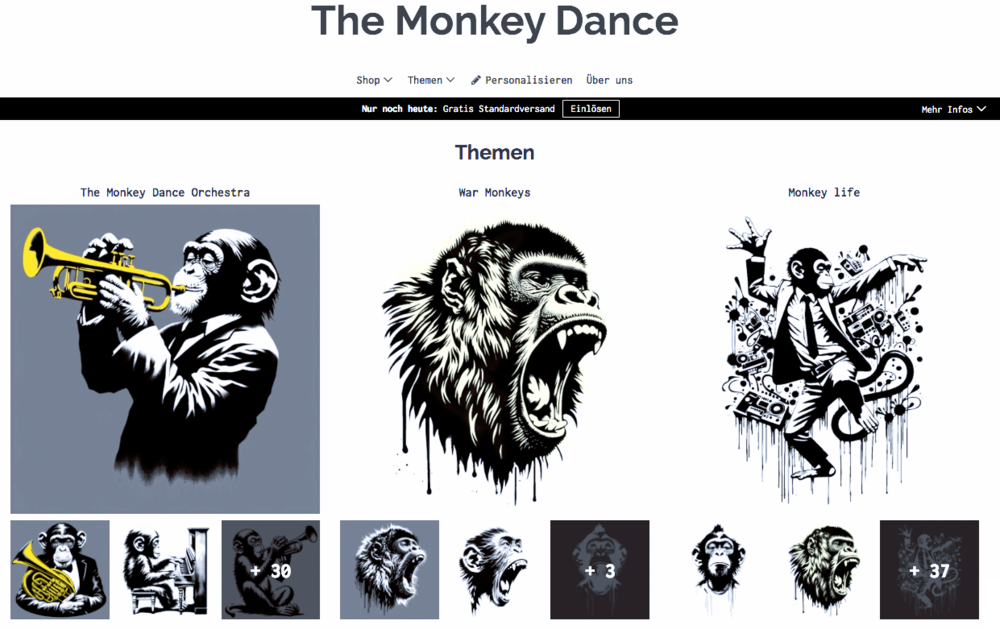
THE MONKEY DANCE


|
|
|


|
 |


Sponsoren, Förderer, Kooperationspartner
Children for a better world >> Förderung der AI Fair-Image Challenge
Fair-Image wird von CHILDREN JUGEND HILFT! gefördert und ist mit der deutschlandweiten AI Fair-Image Challenge SIEGERPROJEKT 2025. Alle Infos zur Challenge hier >>. Infos zum Camp25 gibt es hier. Wenn auch Ihr Euch ehrenamtlich engagiert und noch finanzielle Unterstützung für Eurer Projekt braucht, dann stellt gerne einen Antrag bei JUGEND HILFT.