Colors


Colors
Colors
Colors are everywhere, surrounding us in every aspect of our lives. They have the power to influence mood, communicate information, and even affect decisions. This aiMOOC will delve into the fascinating world of colors (Farben), exploring their significance, how they are perceived, and their impact on culture and psychology. Whether it's the calming blue (Blau) of the ocean, the fiery red (Rot) of a sunset, or the vibrant green (Grün) of a forest, colors play a crucial role in our visual experiences and emotional responses.
Additive Color
Subtractive Color
Understanding Colors
Colors are not just a visual experience but also a psychological one. They can evoke emotions, influence thoughts, and even trigger memories. Let's explore the basics of colors and how they are categorized.
The Color Wheel
The color wheel is a fundamental tool for understanding the relationships between colors. It consists of primary colors (Primärfarben) - red (Rot), blue (Blau), and yellow (Gelb) - which can be combined to create secondary colors (Sekundärfarben) - orange (Orange), green (Grün), and purple (Violett). Tertiary colors are formed by mixing primary and secondary colors.
Color Properties
Each color has three main properties: hue (Farbton), saturation (Sättigung), and brightness (Helligkeit). Hue refers to the color itself, saturation to the intensity of the color, and brightness to how light or dark the color is.
Color Psychology
Color psychology studies how colors affect human behavior and emotions. For example, blue (Blau) is often associated with calmness and stability, while red (Rot) is linked to energy and passion.
The Impact of Colors
Colors have a significant impact on various aspects of life, including art, design, marketing, and personal preferences.
Colors in Culture
Colors hold different meanings in various cultures. For instance, white (Weiß) is traditionally worn at weddings in many Western cultures, symbolizing purity and innocence, whereas in some Eastern cultures, it is worn at funerals, representing mourning.
Colors in Marketing
In marketing, colors are used strategically to influence consumer behavior. For example, green (Grün) is often used to promote environmental products, suggesting a connection to nature.
Interactive Activities
Quiz: Teste Dein Wissen
What is the primary color that cannot be created by mixing other colors? (Red) (!Orange) (!Purple) (!Green)
Which color is often associated with calmness and stability? (Blue) (!Red) (!Yellow) (!Black)
What property of color refers to its intensity? (Saturation) (!Hue) (!Brightness) (!Volume)
Which color is typically used in marketing to suggest environmental friendliness? (Green) (!Blue) (!Red) (!Yellow)
What does the color white symbolize in many Western cultures? (Purity and Innocence) (!Mourning) (!Passion) (!Envy)
What are the secondary colors? (Orange, Green, and Purple) (!Red, Blue, and Yellow) (!Black, White, and Grey) (!Pink, Teal, and Maroon)
What property of color determines how light or dark it is? (Brightness) (!Hue) (!Saturation) (!Density)
In which culture is white traditionally worn at funerals, representing mourning? (Some Eastern cultures) (!Western cultures) (!Northern cultures) (!Southern cultures)
Which color is linked to energy and passion according to color psychology? (Red) (!Blue) (!Green) (!Yellow)
What is created by mixing a primary color with a secondary color? (Tertiary color) (!Quaternary color) (!Quinary color) (!Senary color)
Memory
| Red | Primary Color |
| Blue | Calmness and Stability |
| Green | Environmental Friendliness |
| White | Purity and Innocence in Western Cultures |
| Saturation | Intensity of Color |
Kreuzworträtsel
| Red | A primary color that cannot be created by mixing other colors |
| Hue | The color itself |
| Brightness | Determines how light or dark a color is |
| Green | Often used to promote environmental products |
| Yellow | A primary color alongside red and blue |
LearningApps
Lückentext
Offene Aufgaben
Leicht
- Create a Color Wheel: Use paints or colored pencils to create your own color wheel, showing primary, secondary, and tertiary colors.
- Explore Color Meanings: Research and write a short essay on what different colors mean in various cultures around the world.
- Color Emotions Diary: Keep a diary for a week, noting how different colors you encounter in your daily life make you feel.
Standard
- Design a Room: Choose colors for a room based on the emotions you want to evoke. Explain your choices.
- Analyze Advertisements: Pick three advertisements and analyze how they use color to influence consumers.
- Color in Nature Photography: Take photographs of nature, focusing on how colors are used to communicate or enhance the scene.
Schwer
- Art Project: Create an artwork that expresses an emotion using only colors and shapes, no figures or objects.
- Marketing Campaign: Design a marketing campaign for a product, using color psychology to influence potential customers.
- Color Psychology Experiment: Conduct a small experiment to see how different colors affect people’s mood or behavior.

|
|


Mündliche Prüfung
- Discuss the impact of color on human psychology: How do different colors affect our mood and decisions?
- Explain the significance of colors in marketing: Why do marketers choose specific colors for their products and brands?
- Interpret the use of colors in a famous artwork: Choose an artwork and discuss how the artist used colors to convey messages or emotions.
- Compare color meanings in different cultures: How does the meaning of a specific color vary across cultures?
- Design a color scheme for a public space: Choose a public space and propose a color scheme that would enhance the environment for its users.
OERs zum Thema
Links
Teilen - Diskussion - Bewerten
Schulfach+

|
|
















aiMOOCs



aiMOOC Projekte
















|
|





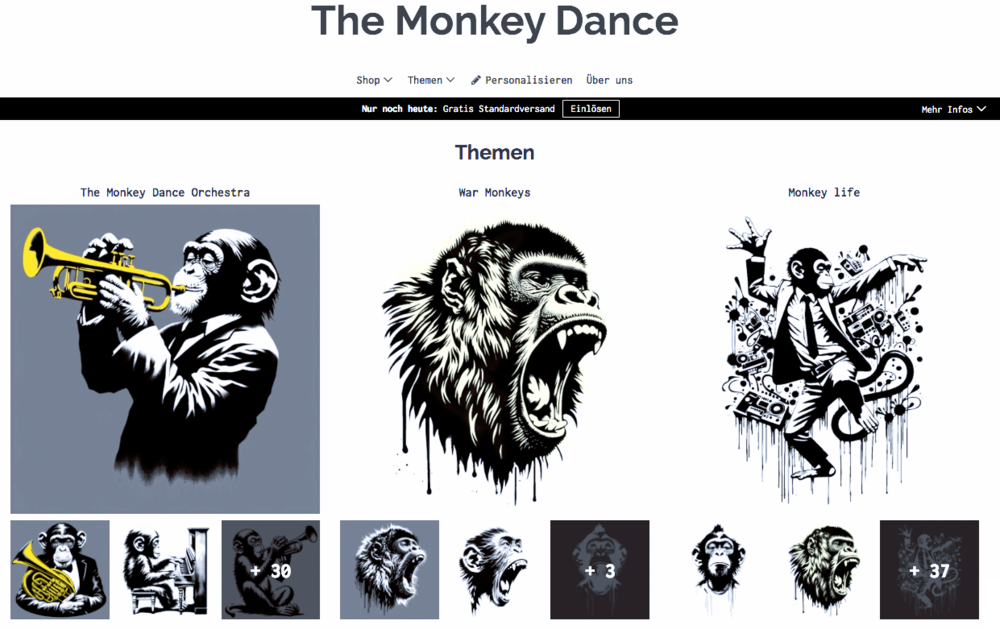
THE MONKEY DANCE
|
|
|
|
 |


Sponsoren, Förderer, Kooperationspartner

Children for a better world >> Förderung der AI Fair-Image Challenge
Fair-Image wird von CHILDREN JUGEND HILFT! gefördert und ist mit der deutschlandweiten AI Fair-Image Challenge SIEGERPROJEKT 2025. Alle Infos zur Challenge hier >>. Infos zum Camp25 gibt es hier. Wenn auch Ihr Euch ehrenamtlich engagiert und noch finanzielle Unterstützung für Eurer Projekt braucht, dann stellt gerne einen Antrag bei JUGEND HILFT.